Waiting

image

“I don’t like to wait, Nana.”

My first thought was, “dear Daniel, you have a lot of waiting ahead of you in life.”

My next thought was “I don’t like to wait either!”
image

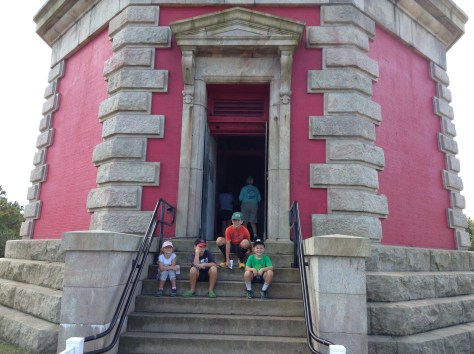
We were at the Cape Hatteras Lighthouse on the Outer Banks of North Carolina. The National Park Ranger had given us a time to ascend to the top, all 257 steps. They limit the number of people in the lighthouse at any given time so that everyone is safe, and to maximize each individual’s viewing opportunity. Our time slot was 30 minutes away.

I can understand Daniel’s impatience. The lighthouse was so beautiful, towering over us on a clear October day. We had just eaten our picnic lunch in the park and we had told the children that we would climb the lighthouse after we finished our lunch.

Now we had to wait.

Waiting is part of life.

Yet our culture is programmed for INSTANT response, isn’t it? Not only can we access information all the time most everywhere, we are constantly being enticed to acquire faster service with more data capacity. No wonder our children don’t like to wait!

How can we help our children and grandchildren (and ourselves for that matter) learn to wait with patience and grace?

  • be an example of waiting with patience ourselves

when we are placed in situations where we must wait, like traffic jams, long                     lines in the store, for food in restaurants, for a family member getting ready –                   we must show patience ourselves. Our irritation for waiting will send a strong                 message.

  • talk to our children about why we must wait

explain that many things in life require waiting, like a child being born, for                       instance, and we must wait for these occurrences patiently. Young children                       may not understand the concept of time, but they will understand our                                 example of irritation or patience.

  • create “waiting games” that help the child learn to use time in positive ways

 digital devices can be positive tools in our lives, but pressing a “game” in front of a child whenever the child must wait will create a new set of  problems.                        Look around you and name colors, count people, find objects that start with                     “b”. Use the time to plan a special dinner, a birthday party (that the child must                  WAIT for), have the child write out your shopping list, even if they can only                        write the first letter of a word

  • be prepared to wait

carry in your car, bag, large purse – some “waiting” items. Paper to write                              Grandma a letter (YES!), a coloring book and crayons or pencils, a small book                    to read, or ask the child to tell you the story using the illustrations. Use                                waiting time to count money and explain the various values of coins. (not as                      effective with plastic!)

Sometimes we must wait for YEARS before something happens that we hope and pray for. Yet God is faithful, especially as we wait.

Isaiah 40: 30-31 says this about waiting –

30  Even youths shall faint and be weary,
      and young men shall fall exhausted;
31   but they who wait for the Lord shall renew their strength;
      they shall mount up with wings like eagles;
      they shall run and not be weary;
      they shall walk and not faint.
What a wonderful promise for those who learn to wait!
Let’s make it a personal goal to be patient as we wait, and to model that for the children in our lives.

Stay Connected

We have two grandchildren starting kindergarten this year. Our oldest grandchild is starting 7th grade. How time has flown by!

For several years in a row, Phil and I were invited to give a talk to parents of kindergarten students at Scotts Creek School where Phil taught 7th and 8th grade Language Arts.

We would introduce ourselves as parents of four grown children, and say that between us, we had many years (40+) of teaching experience. This was meant in no way to give the impression that we were experts. Yet we did want those listening to know where we were coming from. The purpose of the session was to encourage parents to start at the beginning to take an active role in their children’s education – then maintain that involvement throughout their child’s career in school.

It is evident at any school open house, the higher the grade, the less parents come to meet their child’s teacher. Why do parents start out involved and present at school activities when their children are young, then fade into the background as their child grows?

Unless it is an athletic event, it is difficult to get parents of teens to show up at school.

Children NEED their parents to stay involved in their education!

Phil would share this comment as we began – “I want to share some strategies with you as your child begins kindergarten so that by the time they reach my classes in 7th and 8th grade, they know how to be a responsible student. It will make my job a whole lot more effective and enjoyable for your child and for me.” (This usually got several polite laughs. 🙂

If we think that the moment we turn our children over to a teacher, our responsibility for their education in over, we are sadly mistaken.

As parents, we have a vital role in supporting, monitoring, advocating, and (only when absolutely necessary) intervening in our children’s education. There is no excuse to abdicate that role to a teacher. As a dedicated teacher myself, I admit that I did not see and hear everything that went on in my classroom. I also know that I was not aware of some of the special needs or circumstances my students faced – unless the child or parent told me.

We gave the parents of kindergarten students a handout with four suggestions as follows:

Follow Through –

  • If you say, “No video games until you pick up your toys” stick to it.
  • Don’t say it if you don’t mean it.
  • Don’t take excuses. This leads the child to believe that your instructions are negotiable.
  • It takes effort but it will pay off!

Read to (and with) your Child –

  • This is the MOST important activity you can do to encourage your child’s academic growth
  • It will help them be the best student they can be.

Talk WITH Your Child – Listen

  • It is important to ask them about school, then ask the “next question”,
  • i.e. “Did you learn anything new today? “What was it? “Did you enjoy it?” Why or why not?”
  • “Did anything funny happen at school today?” “What happened?”
  • “Did you do your homework?  “Let me see it.”

Limit Screen Time –

  • Using devices, watching TV, videos, playing video games, even educational content, may rob children of doing many things that are important to their physical, emotional, and social development, like playing outside or reading a book.

God speaks to the children of Israel and says the following:

Deuteronomy 11:18-19 (NIV)

18 Fix these words of mine in your hearts and minds; tie them as symbols on your hands and bind them on your foreheads. 19 Teach them to your children, talking about them when you sit at home and when you walk along the road, when you lie down and when you get up.

Verse 19 encourages a continuous connection with our children. Stay connected.

May God bless our children and grandchildren with a great school year that helps them grow in God’s grace. May we be faithful to encourage them.


90 Years of Thankfulness

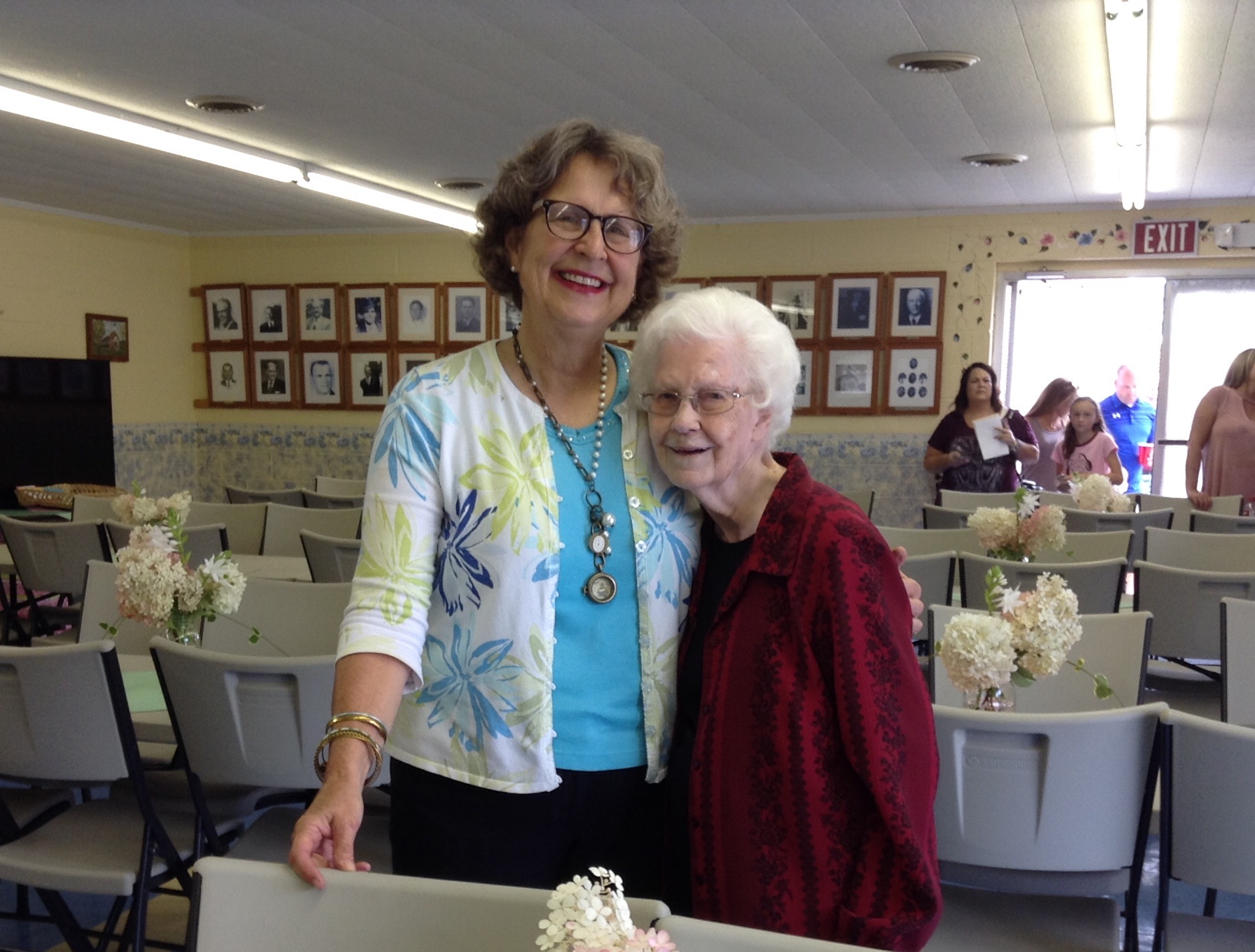
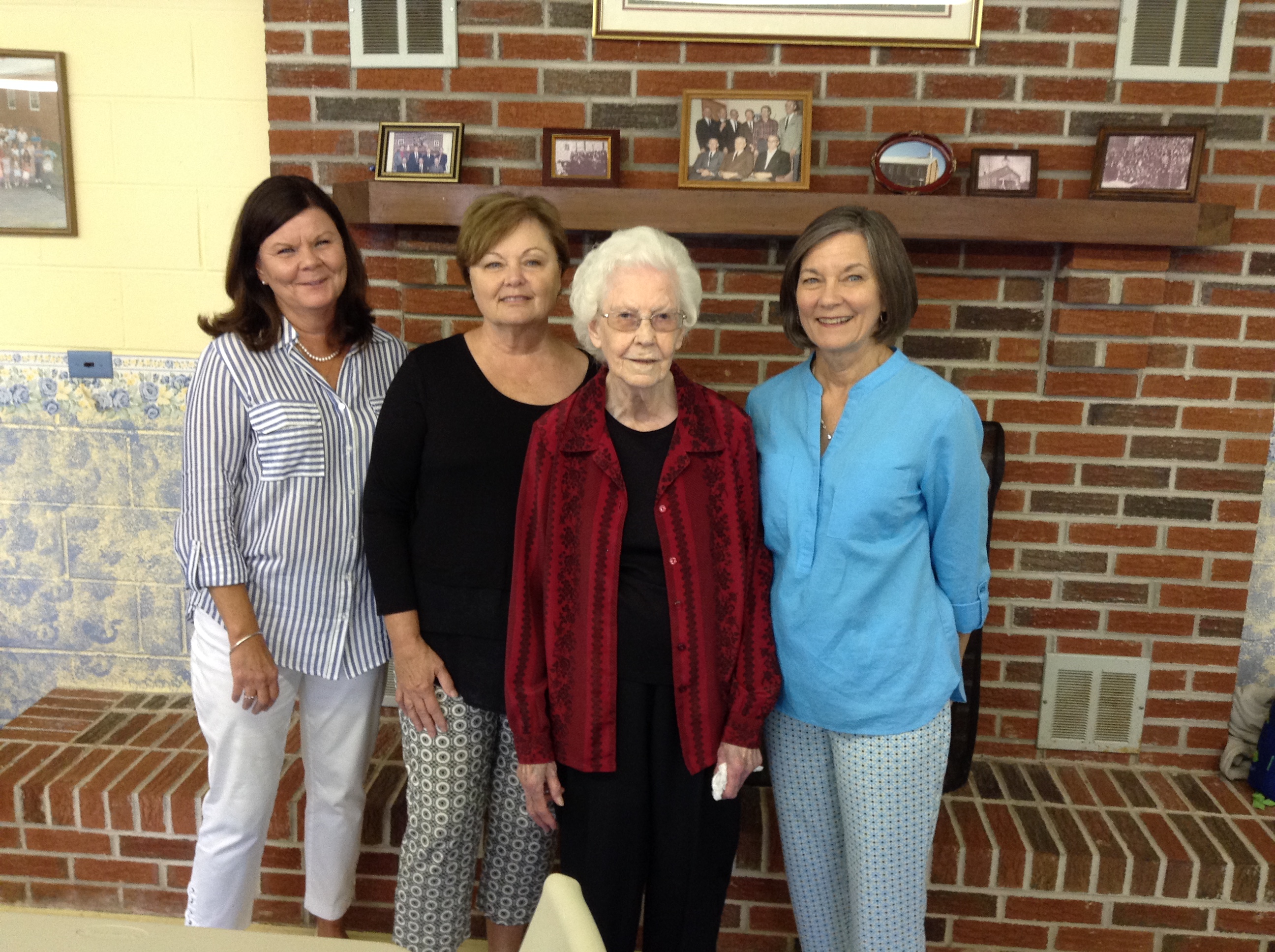
We had the privilege of celebrating a birthday Saturday with a dear family friend, Nana Kehrli. She is 90 years old, still lives in the home where she raised 3 lovely daughters, just down the road from where she was born on Stoney Creek in eastern Tennessee.

Nana, almost everyone calls her that, has slowed down some physically, but her mind is as sharp as a tack. She is an amazing cook – her Southern pork chops just melt in your mouth. Eating “farm to table” is a trend that is growing in popularity throughout our culture – Nana and her family have always eaten that way.

It could certainly be a factor in her 90 healthy years.

She and her sisters ran a grill, a small community restaurant several years back. It was very popular with local folks who knew they would get the best in home-cooking. They probably never made a lot of money because these Southern ladies treated their customers as they would guests in their home.

“Honey, did you get enough? Do you want some more?.”

“Here, take this plate to your mother. I hear she is feeling poorly.”

If Nana knew someone was recently widowed, she would send an extra meal home for lunch the next day. If she knew someone was hurting financially, she gave a discount.

Nana has seldom gone to the doctor in her 90 years, besides the births of her three daughters. “I don’t go to the doctor, he’ll just find something wrong with me.” she has often been heard to say.

Nana has been a widow since 1968 when her Air Force husband was killed in the Vietnam War. She raised her daughters with the love and support of her close knit family on Stoney Creek.

I told Nana Saturday that she could be so thankful for her 90 years of health and mental acuity.

“Gayle, honey, I get up every morning and thank God for all He has blessed me with. I didn’t know of anyone who is as blessed as I am.”

What a testimony of God’s faithfulness!

Colossians 2:6-7 says

So then, just as you received Christ Jesus as Lord, continue to live your lives in him, rooted and built up in him, strengthened in the faith as you were taught, and overflowing with thankfulness.

May Nana Kehrli be blessed with God’s grace and peace in her remaining days.

I want to follow her example – overflowing with thankfulness each day for God’s blessings.