“No” Still Means “No”

CSC_9709 (1)

We have dear friends who have 4 children just like we do, also now grown. Their children were all born after our youngest, so it has been interesting (fun?) to watch their children go through each of the growth stages after our children had done so.

This kind of situation is proof that hind sight is 20-20. It is so easy to think of solutions after one has faced a particularly difficult stage with a child. It is also easy to watch children a few years older than yours and think “I would never let my children do that!”

This is dangerous territory!

Truth be known, no two families are alike and we don’t know what we would do in another’s situation.

Our friends had one child with a strong will – to be honest and a VERY strong will. They are effective, nurturing parents and from the beginning they set clear boundaries and had realistic expectations. Yet, this child tested every limit and challenged every standard set by the parents. We were visiting from out-of-town one weekend when he was about 3 or 4 years old. The parents were giving bed time instructions to their children and this one kept asking for changes to the normal routine.

Children will frequently do this when there are guests since they think the parents

  • 1) aren’t really paying attention or
  • 2) the parents don’t want a “scene” in front of the guests.

Both of these ideas are quite often TRUE!

Our friends did not give in. They firmly repeated “no means no” and refused to discuss the matter further. This did not deter their son at first. He, being a very bright and creative child, had new and unique alternatives to the standard bedtime procedures. The parents did not cave in, they repeated “no means no” calmly and firmly and soon their son was in bed.

I commented to the mother after he was tucked in for the night, “You were so consistent! You repeated “no means no” and meant it!” She smiled a weary smile and said, “Gayle, if you only knew how many times a day I say that. Every reason I give him just creates another opportunity for him to come up with an excuse for not obeying. But a simple “no means no” works. Sometimes I get so tired and I want to give up, but I know we need to require obedience.”

Don’t give up.

God requires obedience from His children “Thou shall not steal” “Thou shall not commit adultery” “Honor your father and your father”. Exodus 20: 12, 14, 15

These are not suggestions. God does not say “If it’s ok with you, don’t take anything that isn’t yours” or  “Try to be faithful to your husband, alright?”

To God – no still means no.

Are we sending mixed messages to our children when it is nap time and we say “Do you want to take a nap now?” Is there a choice? If there is fine – but nap time in our house was NOT a choice. It was the goal each afternoon to get everyone fed, changed, and down for a nap at the same time! If I had said “Do you want to take a nap now?” one of my four might have said “no!” My day would have fallen apart!!!

Yet I hear many parents, and I probably did this some myself, ask their children if they are ready for lunch, nap time, supper, clean up time, bath time, etc. It would be a clearer communication of my expectations if I said, “It’s time for lunch. Please come sit down at the table.” ” It’s nap time, take your shoes off and pick out one story.”, or “You had so much fun playing with all these toys today. Now it is time to put them away before you go to bed.”

It is unfair to the child to appear to a choice when I don’t intend to allow the child to choose. Let my “no” mean “no” and my “yes” mean “yes”.

Believe me, it will be so much easier when your children are teenagers if they learn “no means no” at a young age! It is less difficult to deal with issues of obedience when a child is 3 or 4 than when they are 13 or 14.

No still means no.
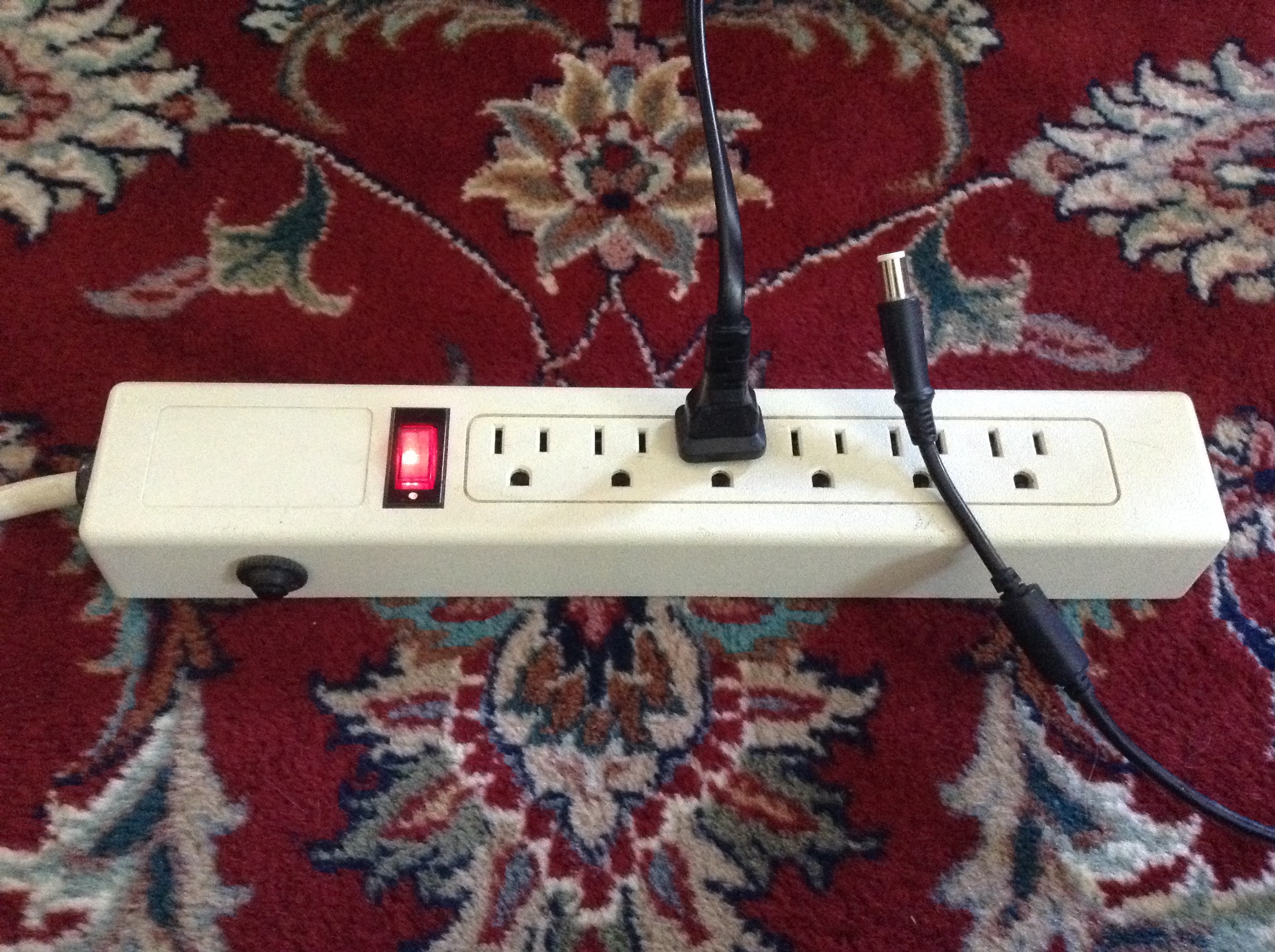
Get Plugged In


image

“I always check first to see if the computer is plugged in, or if the power source is on.”

Our tech guy was explaining to me why he was checking the power source and connection of my classroom computer.

“You would be surprised how many times folks contact us for tech help and their computer isn’t plugged in or the power strip is turned off.”

I breathed a sigh of relief when my computer was in fact on.

I did spend about 20 minutes one day because my computer wouldn’t take my password. A co-worker came by and noticed that the computer was logged in to the substitute I had while attending a workshop. I logged myself in and AMAZING – it took my password! SO GLAD I hadn’t called the tech guy!

Do we do this as Christians? Do we run to someone for help, when we aren’t even connected to the Power Source?

Yes.

We do this more often than we realize. Sometimes we just wallow in our worry, despair, or confusion wondering why we feel so “disconnected” or so “drained.”

As a Christian, my source of power is the Holy Spirit. Paul tells us in Romans 15:13 –

13 May the God of hope fill you with all joy and peace as you trust in him, so that you may overflow with hope by the power of the Holy Spirit.

No matter what we are facing in life, we can have hope, joy, and peace if we are connected to the source of power.

How do we get connected? Peter preaches his famous sermon in Acts chapter 2 on what we call the day of Pentecost. The crowd asked Peter after his message how they could respond. Acts 2:38 -39

38 Peter replied, “Repent and be baptized, every one of you, in the name of Jesus Christ for the forgiveness of your sins. And you will receive the gift of the Holy Spirit. 39 The promise is for you and your children and for all who are far off—for all whom the Lord our God will call.”

This promise is for each of us – and for our children!

Later in this chapter, we are told how to STAY connected. Acts 2:42.

42 They devoted themselves to the apostles’ teaching and to fellowship, to the breaking of bread and to prayer.

These four disciplines will assure that we stay connected to the source of power.

  • Biblical teaching
  • Fellowship
  • Eating together
  • Prayer

Attending a women’s Bible study addresses each of these disciplines for me.

  • Biblical Teaching – We study God’s word together. I am always blessed by insight from God’s word that various women share, often truth that I see in a new light.
  • Fellowship  – The fellowship is encouraging and such a blessing! Women of various ages and different churches and backgrounds attend. I have met women I would never have met apart from this fellowship.
  • We share food once in a while, which is always nice, nourishing our bodies and souls.
  • Prayer – we pray for each other after sharing requests each session and also pray during the week.

If you are not connected to the Source of Power, consider attending a Bible study. There is often child care available for mothers of young children.

Let’s get plugged in and stay plugged in to Jesus, the source.


Start at the Beginning – Stay ‘Til the End

Hawkins - 1st day of school - 2024

For several years in a row, Phil and I were invited to give a talk to parents of kindergarten students at Scotts Creek School where Phil taught 7th and 8th grade Language Arts.

We would introduce ourselves as parents of four grown children, and say that between us, we had many years (40+) of teaching experience. This was meant in no way to give the impression that we were experts. Yet we did want those listening to know where we were coming from. The purpose of the session was to encourage parents to start at the beginning to take an active role in their children’s education – then maintain that involvement throughout their child’s career in school.

It is evident at any school open house, the higher the grade, the less parents come to meet their child’s teacher. Why do parents start out involved and present at school activities when their children are young, then fade into the background as their child grows? Unless it is an athletic event, it is difficult to get parents of teens to show up at school.

Phil would share this comment as we began – “I want to share some strategies with you as your child begins kindergarten so that by the time they reach my classes in 7th and 8th grade, they know how to be a responsible student. It will make my job a whole lot more effective and enjoyable for your child and for me.” (This usually got several polite laughs. 🙂

If we think that the moment we turn our children over to a teacher, our responsibility for their education in over, we are sadly mistaken. As parents, we have a vital role in supporting, monitoring, advocating, and (only when absolutely necessary) intervening in our children’s education. There is no excuse to abdicate that role to a teacher. As a dedicated teacher myself, I admit that I did not see and hear everything that went on in my classroom. I also know that I was not aware of some of the special needs or circumstances my students faced – unless the child or parent told me.

We gave the parents of kindergarten students a handout with four suggestions as follows:

Follow Through –

  • if you say, “No video games until you pick up your toys” stick to it.
  • Don’t say it if you don’t mean it.
  • Don’t take excuses. This leads the child to believe that your instructions are negotiable.
  • It takes effort but it will pay off!

Read to (and with) your Child –

  • This is the MOST important activity you can do to encourage your child’s academic growth
  • It will help them be the best student they can be.

Talk WITH Your Child – Listen

  • It is important to ask them about school, then ask the “next question”,
  • i.e. “Did you learn anything new today? “What was it? “Did you enjoy it?” Why or why not?”
  • “Did anything funny happen at school today?” “What happened?”
  • “Did you do your homework?  “Let me see it.”

Limit Screen Time –

  • Using devices, watching TV, videos, playing video games, even educational content, may rob children of doing many things that are important to their physical, emotional, and social development, like playing outside.

God speaks to the children of Israel and says the following:

Deuteronomy 11:18-19 (NIV)

18 Fix these words of mine in your hearts and minds; tie them as symbols on your hands and bind them on your foreheads. 19 Teach them to your children, talking about them when you sit at home and when you walk along the road, when you lie down and when you get up.

May God bless our children and grandchildren with a great school year that helps them grow in God’s grace.