The Mysteries of Creation

My friend Norma Clayton appeared in an article recently in our local newspaper. She had noticed a unusual bird in her yard. It had a band around it’s leg and her husband lured it into a cage so they could find out what kind of bird it was. Through the help of several local friends and acquaintances they determined it was a carrier pigeon belonging to someone hundreds of miles away. David Nestler was able to contact the owner and discover that the bird had gotten lost and not returned home as carrier pigeons usually do. It was an interesting story and stirred up my interest in this unique bird. In reading a bit about these birds, also known as “homing pigeons” their unique ability is to return home no matter where they are. They can be released far from home and carry a message back to their original home over long distances. These birds can become lost if there is bad weather or a predator chases them off course, but it is rare for them not to return home.

Norma’s story fascinated me partly because I have no sense of direction. I have gotten lost many times in my life and God’s grace and the kindness of strangers has helped me more times than I can count. (being married to Phil who has an internal GPS is extremely helpful)

How those birds can find their way home mystifies me! I have made wrong turns when the color of a building changed or a favorite tree was cut down. I can’t imagine flying thousands of miles over ever changing landscapes and not loosing my way. Geese and other birds return to nesting grounds thousands of miles away year after year.

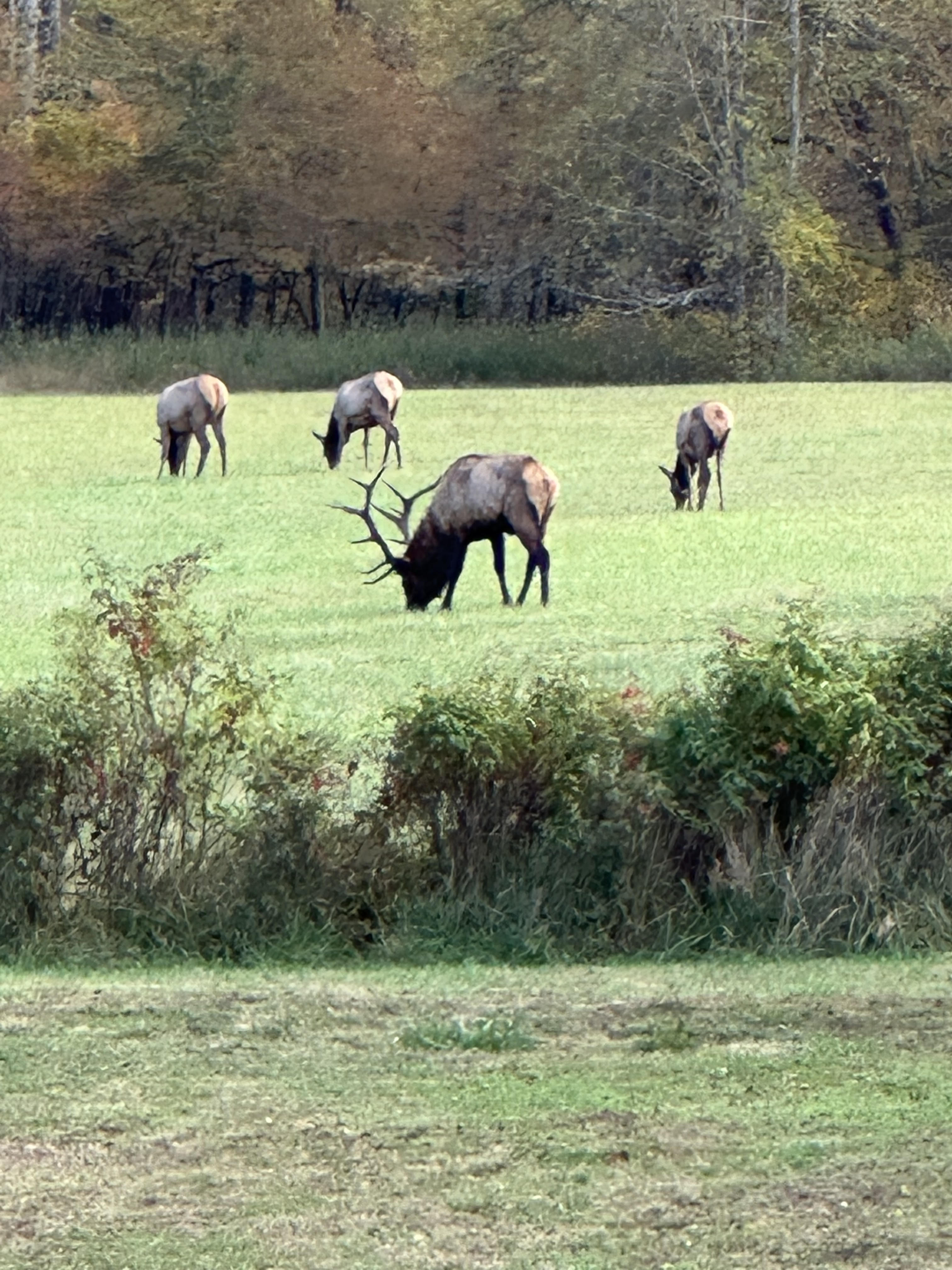
Carol and I went to watch the elk this week. What magnificent creatures they are! Looking at these few examples of the wonder of God’s creation reminds me of the fact that there are many mysteries in the natural world. Science – the study of the world around us – is always looking for explanations. We want to know why things are the way they are. Many of these mysteries have no explanations yet. This gives scientists job security. Humans keep observing and studying and asking “why?”.

The apostle Paul tells us in his letter to the Romans that everything God has made reveals God’s nature to us. We can’t see God, but we can see the results of his creative power and divine nature.

Romans 1:20 NLT

20 For ever since the world was created, people have seen the earth and sky. Through everything God made, they can clearly see his invisible qualities—his eternal power and divine nature. So they have no excuse for not knowing God.

Romans 1:20 The Message

But the basic reality of God is plain enough. Open your eyes and there it is! By taking a long and thoughtful look at what God has created, people have always been able to see what their eyes as such can’t see: eternal power, for instance, and the mystery of his divine being. So nobody has a good excuse.

These mysteries of creation remind me that God reveals himself to us through creation. God wants relationship with us and has provided the path to that relationship through his Son Jesus.

Seeing the wonder and beauty of God’s creation is all the more glorious because I also know God as Father. That the God of creation has called me by name to join his family is humbling and yet it fills me with hope knowing anyone, anywhere may also join God’s family.

Making Space

A friend, Janet Asbury, shared at church Sunday that God was convicting her of “making space”. She shared that this phrase is currently being used in our culture to denote the importance of being intentional in our every day lives. Making space for the really important things. In the hustle and bustle of all we fill our lives with – are we setting aside QUALITY time with God, or squeezing in a moment here and there when we “can”? Are we making space for God, our Father, creator of the universe? Is that space a priority or an afterthought?

That certainly convicted me! I just wrote a blog on June 1,2023 entitled “Cut It Out” about the need to cut out things in our lives that crowd out the really important things. (see the link below)

Cut it Out

Yet what Janet shared caused me to think about the difference between cutting something out and making space for something.

I can cut out plants in my garden that I no longer want in that space. I can dig them up and throw them over the bank, or plant them somewhere else. The issue becomes – what do I do with that space? If I just leave that space it will soon be filled again with weeds or another plant I may not want there. I must either mulch that space well so weeds can’t grow or plant a smaller, less invasive species. Otherwise I will soon have an overcrowded garden again. Back to the old same-old same-old!

This is true in our lives. We may cut out things we realize are not productive – but what do with that “space” that we created? If we are not intentional about filling that space, the same behavior and habits will return right back to where they were in our lives. This time they may be harder to root out.

I have a beautiful butterfly weed plant that my father planted. Not only did he love the bright orange color, but he enjoyed watching the butterflies the blooms attracted. Last year it was very small and on closer observation I realized it was overcrowded by a nearby azalea and a groundcover. The azalea is beautiful in the spring, but cutting it back would not harm it and it would create space for the butterfly weed to grow. The ground cover was another story. It was invasive and just taking over.

So – one plant I cut back.

One plant I completely pulled up and threw over the bank.

Did that solve the problem once and for all? NO

I go back frequently and pull up weeds and that old ground cover to make space for the butterfly weed. It is not a “once and for all time” deal. Making space is an ongoing effort if I want to effect lasting change.

The disciple and apostle Peter describes the effort we must make spiritually to possess and maintain the qualities we want as a follower of Jesus. 2 Peter 1:3-8 says

3 His divine power has given us everything we need for a godly life through our knowledge of him who called us by his own glory and goodness. 4 Through these he has given us his very great and precious promises, so that through them you may participate in the divine nature, having escaped the corruption in the world caused by evil desires.

5 For this very reason, make every effort to add to your faith goodness; and to goodness, knowledge; 6 and to knowledge, self-control; and to self-control, perseverance; and to perseverance, godliness; 7 and to godliness, mutual affection; and to mutual affection, love. 8 For if you possess these qualities in increasing measure, they will keep you from being ineffective and unproductive in your knowledge of our Lord Jesus Christ.

I will grow spiritually as I intentionally make space for these qualities.

Given Away

I was talking with my friend Lois, who is also a lover of plants, and we were discussing what is currently blooming in our yards. I mentioned to her that our calla lilies, some of which Lois gave me, are blooming profusely. Lois did the flowers for all three of our daughters’ weddings. Salem, first to get married, wanted calla lilies for her flowers. Much later, after Lois had made the bouquets and flower arrangements, she gave me some of the calla lily plants she had used in making the bouquets. Now, many years later, we have blooms that remind us of Salem’s wedding flowers – but also of the generous friendship of Lois over the years.

I thanked Lois again for those plants and she said “I have heard it said that we are not remembered for what we have, but what we give away.”

How profound!

This made me think about all the plants in my yard that have been given to me by friends.

The first plant “gift” I received was from a friend’s mother, Mrs. Gamble. We stayed in her lovely home in Atlanta and as we walked around her garden, I admired the plant that bordered her flower beds. “That’s liriope or monkey grass as we call it. Do you want some?” She dug some up, put it in plastic bags and I still have that border grass today, multiplied many times over and some 43 years and a house later.

I have daisies from Alice Marie Pendergast, pink lilies from Carol Buchanan, Japanese maples from Mitzi Barker (Oregon) day lilies from Mary Henson, hydrangeas, a magnolia tree, and camellia bush from Salem, Japanese maples from Hannah (Washington), a variegated yucca and a rose bush from Abigail, forsythia, variegated periwinkle, and sedum from Aunt Matrid and Aunt Priscilla, a peony from Thomasina, dahlias from David Nestler, bee balm from Ann-Marie Jones, ferns from Julie Phillips, lentin rose and calla lilies from Lois Cline, trillium and purple bells from Toni Mullaney, a gardenia bush from Linda Harrill-Rudesall, a clematis from Deanna Wright, amarylis from Janice Stiens, and the most amazing rhododendrons that Peggy Mason planted and we inherited when we moved here.

I remember all these dear family and friends each time I see our flowers blooming and tend to our garden. What a legacy of love and friendship! Each one gave something away.

In Acts 20:34-35 Paul shares this same principle –

34 You know that these hands of mine have worked to supply my own needs and even the needs of those who were with me. 35 And I have been a constant example of how you can help those in need by working hard. You should remember the words of the Lord Jesus: ‘It is more blessed to give than to receive.’”

I have been so blessed by all those who have shared their plants with me. AND – I am so blessed to share plants with others. I enjoy seeing those plants in a new location, thriving and bringing beauty to that place. It does seem that the more plants I give away, the more plants I have to give away! Those places where I dig up plants leaves room for more plants to grow.

God’s love is like that. As I share His love with others I sense more of His love for me – which then allows me to share more of His love with others. God’s love should be given away.

“For God so loved the world….”