Hope That NEVER Disappoints

Spring has always been a time of hope for me.

As a child I looked forward to “spring break” from school. It always meant a trip to North Carolina to begin cleaning up Holly Cove Campground which my parents ran in the summer. We would clean up the camp sites and prepare for the opening in May. The hope of seeing old friends and making new ones in the summer ahead was exciting to me.

In college, spring break meant traveling with friends to a warmer location. The hope of seeing new places encouraged my love of travel.

As a teacher, spring break was a “break”, but also the sign that the school year was almost complete and the hope that the year had been accomplished well for my students.

Since we purchased our first home in 1980, spring has held a new hope for me. The hope of seeing the plants bloom in our garden. Our first home was an older farmhouse built in 1930 and weeds and brush had really grown up around the yard. As Phil and I worked cutting back the brush it was delightful to see what grew underneath. I greeted each new day with an anticipation of what would push through and bloom. We lived in that home 25 years and those flowers were a blessing we added to each year.

In 2005 we moved to another older home, built in 1880, and my parents moved in with us. This yard had been carefully planted by Peggy Queen Mason and it has older plants from 100 years ago as well as many Mrs. Mason added in the 1980’s. Again we were excited to see all that bloomed in spring since we had moved in in November. We have lovingly added to our garden planting a tree in honor of each of our grandchildren.

Now each spring I anticipate with hope the joy of seeing what will grow and bloom in our garden.

Yet one concern I always have is a late freeze. How many times have I enjoyed lovely warm days in early spring? Then, there is a a late freeze and budding flowers turn brown. My hopes of enjoying those blooms are dashed! We have had days in the 70’s this week and everything is blooming and buds are swelling! I found myself worrying about a late freeze.

I was talking about this with my friend Alice Marie and she reminded me that worrying doesn’t change anything. It is a waste of emotional and spiritual energy. Instead she encouraged me to ENJOY those flowers that are currently blooming instead of focusing on something I have no control over – the weather.

It reminded me of the way I focus on possible tragedies that my children or grandchildren may face – like when they are learning to drive. When I focus on the dangers one faces living in our broken, fallen world, I miss enjoying the blessing of today..

In Romans 5:3-5 Paul addresses this very issue.

We can rejoice, too, when we run into problems and trials, for we know that they help us develop endurance. And endurance develops strength of character, and character strengthens our confident hope of salvation. And this hope will not lead to disappointment. For we know how dearly God loves us, because he has given us the Holy Spirit to fill our hearts with his love.

Hope in God never leads to ultimate disappointment. It is founded in the faithfulness of God. That does not mean we won’t face disappointing circumstances in our daily lives – WE WILL! But God’s love for us is eternal and the confident hope of our salvation is sealed by His Holy Spirit. Come what may in my life, my hope is in God’s everlasting love for me.

So I will enjoy all the flowers blooming this week and not let worry of a future I cannot control damper the glorious demonstration of God’s love for us in His creation.

Natural Habitat

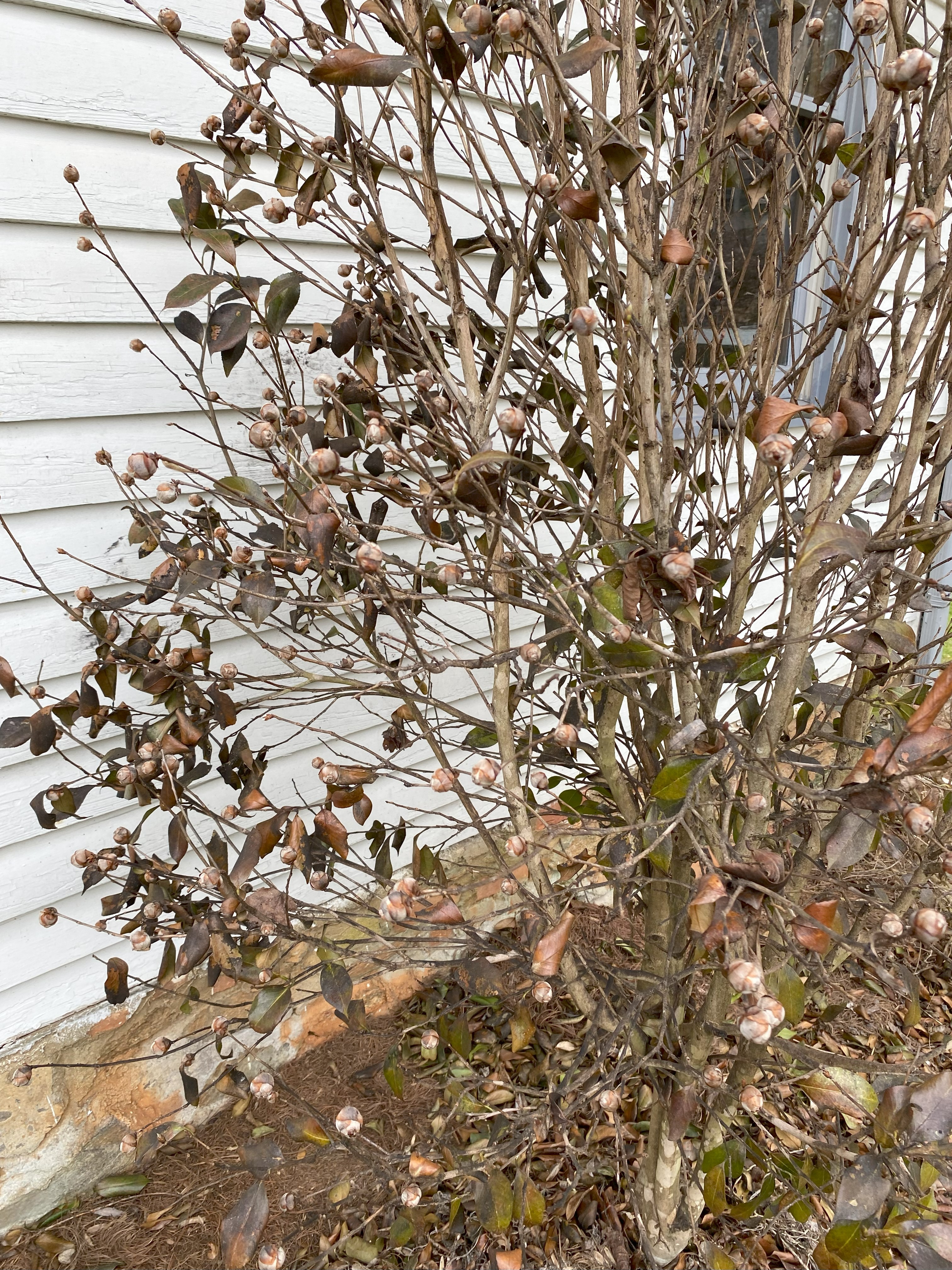
Will this camellia live or not?

Last month we had several days with temperatures in single digits. This is unusual for us and it has taken a toll on our evergreen perennials. Yet walking around our yard I noticed something. The native perennials like American Holly, dog hobble, balsam fur, white pine, native magnolia, rhododendron, and mountain laurel are just fine. Their leaves or needles are just as green as ever.

It is the non-native species that are suffering. Our variegated ornamental bush has lost most all of the green and white leaves that in the past looked lovely all winter. We have three different varieties of camellias which are all suffering with browning leaves and frozen buds. Several azaleas have leaves which are turning brown and only time will tell if they will recover or not. We have mostly perennials in our yard because we appreciate that they grow and bloom year after year. The big freeze has changed that!

Those native plants flourish because this is their natural habitat with the conditions perfectly suited for them. Seeds and plants have “planting zones” for a reason. They are flourish in specific temperature conditions.

This is true in our spiritual life as well. God has prescribed certain conditions that ensure optimum spiritual growth potential. We are studying Acts in our Women’s Community Bible study and I was reminded of those conditions this week.

Acts 2 describes the birth of the church of Jesus Christ. This is the CHURCH that we are ALL a part of if we have accepted Jesus as Savior and Lord. This church is not a building or a denomination or even a specific congregation, but is comprised of the followers of Jesus. In Acts 2 Peter gave his amazing sermon relating God’s plan to redeem us from the fall. Acts 2:41 – 42 says –

41 Those who believed what Peter said were baptized and added to the church that day—about 3,000 in all.

42 All the believers devoted themselves to the apostles’ teaching, and to fellowship, and to sharing in meals, and to prayer.

So here are the four ingredients needed to create the “natural habitat” to ensure spiritual growth. Just as plants need sunlight, rain, the correct soil composition, and conducive temperatures, we need

  • Biblical teaching
  • fellowship
  • sharing meals
  • prayer

The apostles’ teaching is contained in the New Testament and often quotes portions of the Old Testament. Biblical teaching renews our minds and we learn what it means to follow Jesus. Fellowship encourages us and allows us to encourage others as we share in the ups and downs of living in this fallen world. Sharing meals together is a special way to connect with others. The Bible is full of places where God “shows up” while people are eating. Paul says in Hebrews 10:24-25 –

24 And let us consider how to stir up one another to love and good works, 25 not neglecting to meet together, as is the habit of some, but encouraging one another, and all the more as you see the Day drawing near.

Prayer is essential. My dear friend, Ann Melton, shared this week that all our prayers should begin with praise. Jesus taught us that example in what we call the “Lord’s Prayer”. Prayer is our opportunity to communicate with God which involves listening as well as speaking. Prayer is our direct channel to God.

We must nurture our spiritual lives and cultivate the natural habitat that will allow us to grow and flourish spiritually.

Then our lives will produce beautiful fruit of the Spirit for the Glory of God.

Deadheading or Don’t Hold on to the Old

I have frequently had people ask me when looking at the flowers in our yard – “How do you get so many blooms?” “Do you fertilize?”

I deadhead. As soon as a bloom begins to fade, I cut it off.

To be completely transparent, I do fertilize plants in pots because if I water regularly, as I must, nutrients leach out of the soil and must be replenished. We are blessed with great soil in our yard so I do not fertilize plants in the ground.

Yet, back to deadheading. My father, former biology teacher and naturalist in the Great Smoky Mountains National Park, regularly reminded me of the following –

“The job of a plant is to reproduce itself. Flowers produce seeds which then grow new plants. If you cut off the blooms the plant must make more flowers to do its job.”

Clayton Barker

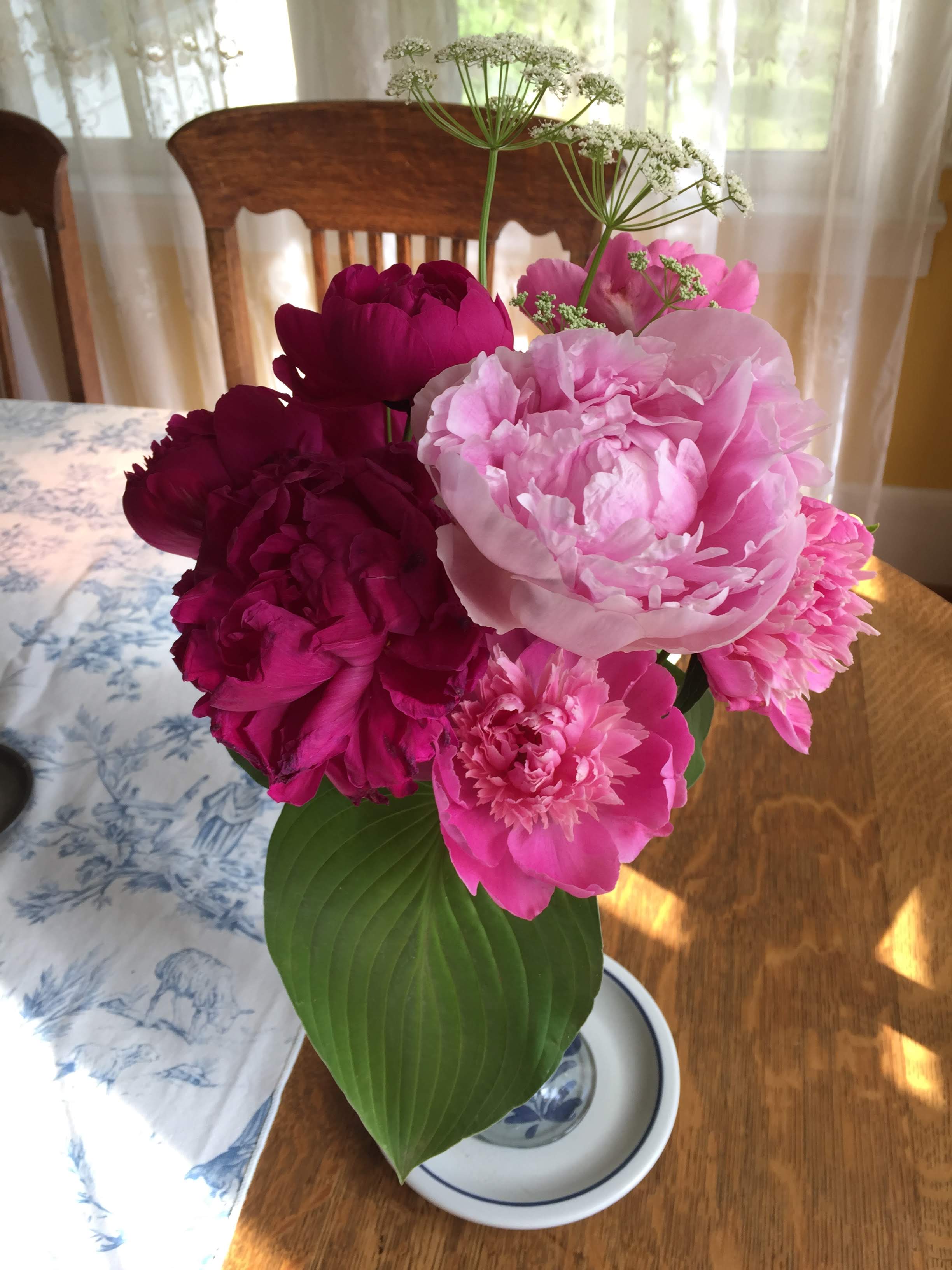
So, deadheading produces more flowers. Each evening I go around our yard with scissors and cut off the spent blooms. New blooms keep growing! I also cut flowers to bring in our home or give away to friends.

HINT: Cut flowers first thing in the morning before the day heats up. Put them in cool water as soon as possible. The flowers will last longer.

While deadheading our flowers the other day I began thinking about how I hold onto things, sometimes when they are no longer useful or don’t work any longer.

  • I leave old food in the fridge – “Maybe Phil will eat this…” way longer than I should.
  • I keep old clothes that no longer fit – “Maybe someday I will wear that size again…”
  • I keep old books I have already read – “Maybe I will read this again someday…”

Do I do this in my spiritual life as well? Do I hold on to old practices just because they are familiar or comfortable? Do the old patterns prevent me from experiencing a fresh awareness of the Holy Spirit working in my life?

Jesus was sharing with his followers the importance of recognizing the new when the disciples asked him about a spiritual practice they were used to doing – fasting.

16 “No one sews a patch of unshrunk cloth on an old garment, for the patch will pull away from the garment, making the tear worse. 17 Neither do people pour new wine into old wineskins. If they do, the skins will burst; the wine will run out and the wineskins will be ruined. No, they pour new wine into new wineskins, and both are preserved.”

Matthew 9: 16-17

Jesus is encouraging his followers to see spiritually in new ways. BUT – Jesus is not throwing out the baby with the bath water. He doesn’t say “don’t mend a garment” or “don’t pour wine”. Instead Jesus wants his followers to receive the new wine – the TRUTH of his teachings – and store them in a new container that will not burst and be ruined. The truth of Jesus’s teachings could not be stored in the traditional teachings of the synagogue or through the Pharisees and Sadducees. The “new container” was the Church – the Body of Christ – you and I.

Jesus wants his followers – you and I – to be that new wine skin containing the new wine. We do this by allowing his Holy Spirit to flow through us. Jesus will reveal himself to us each day if we “deadhead” so the new can bloom.

22 The steadfast love of the Lord never ceases;
    his mercies never come to an end;
23 they are new every morning;
    great is your faithfulness.

LamentaTIons 3:20-23 ESV

When I deadhead I just cutoff the fading bloom. I do not cut off the whole plant. Spiritually, that means I remain in fellowship, read and study his Word, and listen to teaching from faithful followers of Jesus.

It also means I allow fresh new insights from the Holy Spirit – that are “new every morning”.