Rules without Relationship = Rebellion

I was a teenager in the 60’s  – part of that generation most noted for questioning authority. Some of the authority at that time needed to be questioned. The laws and traditions that discriminated against individuals based on race or gender needed to be abandoned and changed. Yet, rules that contributed to public safety, general courtesy or respect, and those that helped maintain an orderly society were also suspect and discarded by some. That left a vacuum for which families are still paying a cost. Rules in and of themselves are not a BAD thing, especially when they protect young children.

Rules within a family can build a sense of security, belonging, and give children direction. These are ALL very positive outcomes.

1) sense of security – a boundary gives children a sense of security. They will come to realize that if they stay within the boundary – obey – they will be safe from punishment or other consequences of disobedience. They also learn that someone loves them enough to require them to hold hands in a parking lot, or save the snack for after lunch.

2) belonging – as soon as children learn to talk, they will compare their privileges (or lack thereof) to those of another child. “Why can’t I have a …….. Suzy’s mom lets her have one!” “Why do I have to sit here?, Freddy gets to sit in front.”As a parent we can feel “peer pressure” to allow our children to do things that we don’t feel comfortable with. Having a clear sense of your families’ convictions about issues that arise will help you avoid the trap of giving in. Some rules apply just because your family feels it is best for them.  Many kids love to join clubs – and there are requirements for membership which the children don’t mind because they want to be a member. The membership in a family is a given, but there can be standards that each family holds as important and which differ from family to family. These can develop a sense of belonging for our children if they understand the reason the family follows those standards.

3) direction – rules that require accountability instill self-discipline in children. These rules provide direction to children letting them know that when they are asked to do something – someone will actually see if they did it! Many young people struggle with a sense of direction. They go from one interest or hobby to the next never investing the time or discipline it takes to become proficient. (see post  – “Cleats or Heels?” 5-14-11) As parents we can give clear direction on risk behaviors to avoid by setting rules.

The KEY to effective use of rules is developing a positive relationship with our children. If a child recognizes that we consistently love and care for them, they will KNOW that the rules we establish are for their good. This does not mean they will always like the rules. If they do – we are probably not doing our job as parents! Yet even very small child can understand that when we take a toy away that is thrown  – it is to protect a little brother or sister.

Proverbs – the book of wisdom – has a lot to say about rules.

Proverbs 6:20-22 NIV                                                                                                                                            20 My son, keep your father’s command
   and do not forsake your mother’s teaching.
21 Bind them always on your heart;
   fasten them around your neck.
22 When you walk, they will guide you;
   when you sleep, they will watch over you;
   when you awake, they will speak to you.

I love how these verses cover it all – “when you walk”, “when you sleep”, when you awake”. God our Heavenly Father models rules within the context of relationship for us. “While we were yet sinners” He loved us, and now that He is our Father, He requires us to walk in His ways.

When we come to know Him as Father and truly believe that He loves us, we have no desire to rebel against God. If the rules we establish in our families are not rooted in our relationship with our children, then rebellion may result.

Too Busy to Play

A dear friend of mine named Joyce teaches 1st grade at a Christian school in a large city. She was telling me recently how busy these 6 and 7 years olds are with activities such as sports, dance, piano, drama lessons, gymnastics, and the list could go on. “These students and their parents tell me they don’t have time to read together or memorize their Bible verses because they are too busy,” said Joyce.

This is a common situation in our current culture. Well-meaning parents don’t want their children to “miss out” so they sign them up for every opportunity possible. They pick children up from school only to run them to the next lesson or practice, leaving little, if any, down time for the child to process their day, play outside, or…imagine this…have quiet time to think.

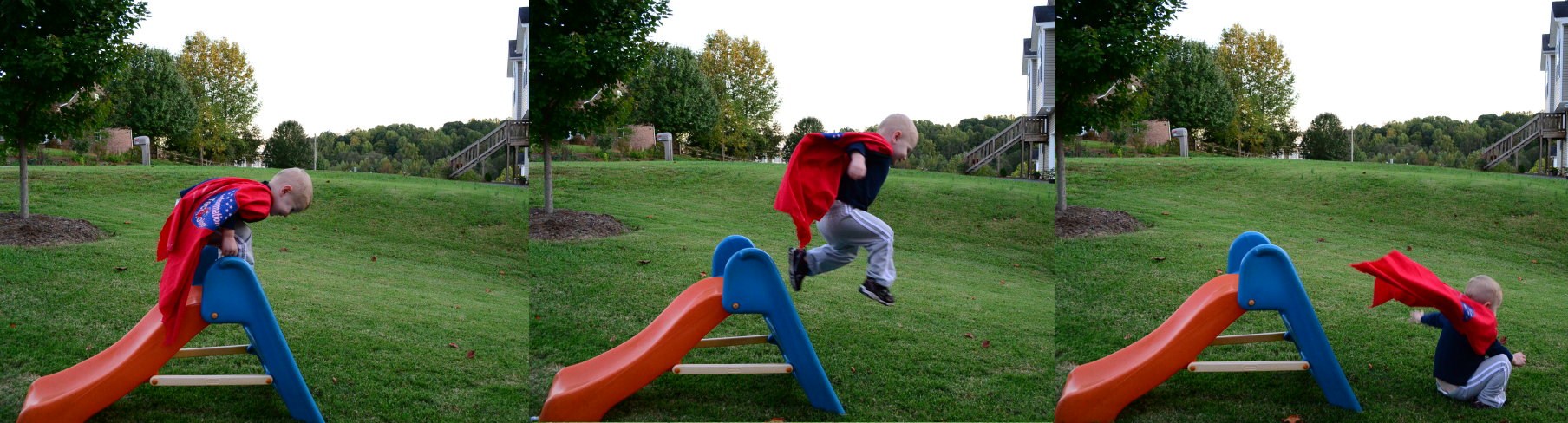
Children learn from play. They learn how to move their bodies, make things like forts or “play houses” out of leaves. They learn to negotiate with siblings or playmates – “May I have the next turn on the swing?”. Children also learn to problem solve when things don’t go as planned while they play. Play allows creativity as children create “meals” from hickory nuts, leaves, and pieces of gravel. Boys will make play weapons out of sticks, dried plant stalks, or pieces of bark and carry on battles with imaginary foes. I am constantly amazed to see the way our grandchildren “make-believe” with found objects collected all around our yard. This type of experiential learning does not take place riding in the car from one practice to another.

I fell victim to this malady as a mother of young children. I had visions of a string quartet practicing daily in our den and then playing for worship on Sundays. What if one of our children was a musical prodigy but never had the chance to play an instrument? Additionally, research shows that children who are musical do better in math! So I proceeded to offer (force?) each child a chance to play a stringed instrument. One by one, each quit to pursue other interests of their own choosing. Hannah was my one hold out and played the violin from six years old until she was thirteen. Then she begged to quit. My husband finally said to me, “Gayle, is Hannah taking lessons for you or herself?”  In all honesty I had to admit it was for me.

If a child has a strong interest and desire to become involved in music, sports, drama, etc. and shows a willingness to practice then this may be an important involvement for that child. But, it is essential as a parent to limit a child’s commitment of time and energy so that important things like family, fellowship, school, and PLAY don’t become neglected because of a schedule that is too busy. One of our children was a joiner – we teased that she would have joined the Communist Party if there had been one in Sylva. We had to say “no” several times until she learned to say “no” for herself.

Psalm 46:10

 He says, “Be still, and know that I am God;
I will be exalted among the nations,
I will be exalted in the earth.”

This verse illustrates a part of our nature as human beings. We must be quiet in order to hear God, to distinguish His voice over all that goes on around us. We are created for God’s pleasure, to worship and honor Him. Our children need to learn to be comfortable with quiet time, to learn to be still. As they mature they will be able to recognize God’s voice even when He chooses to speak in a still small voice.

Cleats or Heels?

“Train a child in the way he should go, and when he is old he will not turn from it.” Proverbs 22:6

This is a verse that brings comfort to us as parents with the hope that our efforts are not in vain. Yet do we understand – “in the way he should go”? I have heard that the word translated “train” in the Hebrew refers to the way a gardener prunes, cares for, and shapes a plant along its natural tendencies. In other words, a skilled gardener knows the properties of his various plants and is sensitive to those strengths and weaknesses as he cares for those plants. For instance, he knows when to prune a hydrangea, right after blooming is finished, not in the early spring causing the current year’s blooms to be cut off. To effectively care for plants, the gardener must know the characteristics of those plants.

As a parent, to effectively train my child in the way that child should go, I must make the effort to know that child. Sometimes they will surprise us! I was reminded of this recently when one of our daughters attended an alumni game at the college where she played soccer. As a little girl she played princess with the best of them and dressed in pink whenever given the choice. She was a princess! Her father realized that she had athletic ability when she was quite young, yet she did not show much interest in sports.  Phil worked with her and “trained” her skills in sports, yet she followed his directions out of pleasure of playing with daddy, not enjoyment of the sport. As she got older, he signed her up for a team and told her if she didn’t like it after the season, she would not have to play again. To make a long story short, she gradually began to enjoy playing, mainly because it is fun to do something one is good at.  Her dad recognized her “natural bend” if you will, and it served her well culminating in a college scholarship. More importantly, soccer led her to the school her future husband would  attend and the common enjoyment of athletics.

This daughter still had a bit of the “princess” in her.  One fall night she walked onto the field where she usually wore cleats, shorts and a jersey and instead had on heels and a lovely gown. The evening  culminated in her being crowned homecoming queen. That was part of her “bend” as well.

As parents we may limit our childs opportunities if we only focus on one aspect of their character. We should pray often for sensitivity to each of our children and recognize their various strengths as they grow and change. God has created each child with unique qualities and one of the great joys of parenting is watching these traits unfold. We must also remember that they are created in the image of God for HIS glory and we must not impose our own “way he should go” on our children.