Contrast

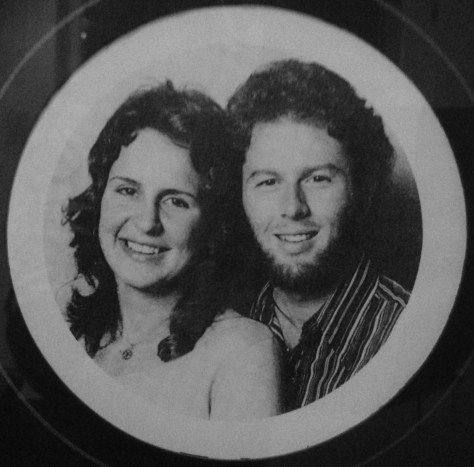
Phil and Gayle 1975

“How did you and Phil ever get together?”

We just celebrated our 40th wedding anniversary, and the answer is still the same –

God

We could be the poster couple for “opposites attract.” Just ask any of our friends, or our children for that matter. Phil and I are very different. That has created definite excitement in our marriage. May I use excitement to describe these extremes?

  • I think money is to use – he thinks money is to save
  • I think decorating means arranging items by color and visual harmony – he thinks it means putting items wherever they fit
  • I think it is relaxing to have friends over for food and fellowship – he thinks relaxing is being quiet by yourself
  • I think it is fun to be in big crowds and be a part of what is going on – he dislikes big crowds (unless it is a major league baseball game)
  • I like to sit near the front at church gatherings, concerts or performances – he likes to sit in the back

These are just a few examples of the contrast between Phil and myself.

Contrast as a principle of design is defined as “the juxtaposition of different elements of design in order to highlight their differences and create visual interest.” Differences create visual interest because things don’t all look just the same. Contrast creates excitement in art work. Light and dark elements of a painting create drama, just as neutral values that are all the same seem dull or uninteresting.

Contrast can also easily become conflict.

Jay Fesperman, a very wise and Godly man shared at a marriage retreat – “If both people in a marriage always agree, one is unnecessary”.

We do NOT have that problem! We often don’t agree. Yet how do we prevent the contrast of our relationship from plummeting into the depths of hurtful conflict?

What has allowed us to stay together and resolve our contrasting viewpoints low these 40 years?

Godly advice.

Ephesians 5:31 Amplified Version

31 For this reason a man shall leave his father and his mother and shall be joined [and be faithfully devoted] to his wife, and the two shall become one flesh. 32 This mystery [of two becoming one] is great; but I am speaking with reference to [the relationship of] Christ and the church. 33 However, each man among you [without exception] is to love his wife as his very own self [with behavior worthy of respect and esteem, always seeking the best for her with an attitude of loving kindness], and the wife [must see to it] that she respects and delights in her husband [that she notices him and prefers him and treats him with loving concern, treasuring him, honoring him, and holding him dear].

This says it all.

Phil and I do not live up to this standard – yet this is what we come back to when the contrast in our relationship threatens to tear us apart.

We do share several things in common –

  • God is first in each of our lives
  • We are both deeply committed to our family
  • We walk in forgiveness toward each other – yes – this is a choice
  • We respect each other, we don’t always agree, but sometimes we agree to disagree

I am humbly thankful for our marriage, because as imperfect as it is, we are committed to walking out the next 40 years together – with God’s help.

God had a plan when He brought us together.

image

2015


Harmony

DSC_1770-2

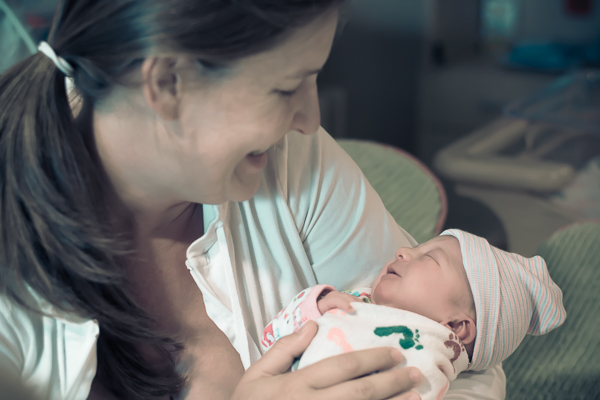
We have been blessed with a new granddaughter this week. She is adjusting well to life outside the quiet confines of the womb. Although, since babies hear inside the womb, having four brothers meant that maybe it wasn’t so quiet after all!

The blessing in this is that baby Rachel sleeps right through the busy play of her brothers – she is conditioned to the noise of active play.

The addition of this precious little one has given the impression that all the parts of this family form a coherent whole. Does that mean that if Rachel had been a boy, or another child had not been added to this family that it would not be complete?

Not at all.

It does mean that once a child is added to a family through birth or adoption it is hard to imagine the family without that child. Each member of the family has a part in the family that is unduplicated and special.

I remember when we found out I was pregnant with our 3rd child and her older sister was just 6 months old. I was overwhelmed and exhausted, yet here was another child growing inside me!

I cannot imagine our family without the presence of this child, now a mother herself.

In art, the definition of “harmony” is as follows –

“The arrangement of elements to give the viewer the feeling that all the parts of the piece form a coherent whole.”

Ephesians 4:3 Amplified Bible

3 Be eager and strive earnestly to guard and keep the harmony and oneness of the Spirit in the binding power of peace.

 I love how the Amplified translation uses the phrase – “binding power of peace”.

What a beautiful image  – when we make the effort to keep harmony in our relationships, it will BIND us together in peace!

As an artist, I must be intentional about creating harmony in my art work. I cannot randomly add color or objects without a plan, otherwise the completed artwork will not be harmonious. I always sketch out my idea first on paper, even if I am planning to work in clay or make a handmade book. This way, I can see if the parts come together in harmony before I use valuable time and supplies. I can make needed adjustments in the sketch.

Romans 12:16 Amplified Bible

16 Live in harmony with one another; do not be haughty (snobbish, high-minded, exclusive), but readily adjust yourself to [people, things] and give yourselves to humble tasks. Never overestimate yourself or be wise in your own conceits.

Giving ourselves to humble tasks creates harmony.

My students often wanted to “just start painting – I know what I want to paint”. I required them to engage in the “humble” task of drawing first. It ALWAYS paid off.

Giving ourselves to humble tasks creates harmony in our relationships.

Changing diapers, cleaning the bathroom, planning meals ahead of time  – all these humble tasks create harmony. Instead of opening the refrigerator at 5:00 pm and seeing if there is anything for supper (my common practice when our children were small) planning meals ahead helps avoid stress when the family is hungry.

My friend Carol and I were sharing recently what a blessing it had been to have our mothers come and stay with us when our children were born. Both were wonderful examples of doing the humble tasks that helped create harmony in those days of adjustment after a new baby comes home.

Carol and I have both recently had the chance to do what our mothers did for us – now for our adult children. (Carol has had three new grandchildren this year!)

May we create harmony in our realtionships by binding ourselves together in peace and serving one another with humble tasks. What a blessing this will be to our families!

Balance

Phil and Gayle

As an artist, I use the principles of design as tools to create my art work. My students would often ask me “what makes something art?”

Great question. This question would usually come up after seeing work by an artist like Jackson Pollock who threw paint at his canvases. Barnett Newman would paint a red line down a large canvas. “I could do that”, my students would say. Yes, they could. But, their name was not Pollock of Newman.

Students never asked me “Why is that considered art?” after seeing images of Michelangelo’s or Leonardo Vinci’s art work. These artists are without question masters because something in their work is timeless and connects with people across various cultures and backgrounds.

Great art has balance.

Balance in art occurs when the parts of the artwork are arranged to create the impression of equality in importance. For instance, the background does not appear more important than the focal point – or main object. Our eyes sense when things are in balance – it is pleasing to look at.

We also sense when things are out of balance. Something just doesn’t look “right”, even if we can’t pinpoint it.

I belive this is an important issue in human relationships as well. There must be balance in the relationship for it to be meaningful and “right”.

Notice that the definition of balance in art uses the word “equality”. For a relationship to be balanced there has to equality of value – each person in the relationship must have equal value.

This does not mean the people in the relationship have the same roles, talents, abilities, or responsibilities. Yet they have the same worth.

Galatians 3:27-29 (NLT)

27 And all who have been united with Christ in baptism have put on Christ, like putting on new clothes. 28 There is no longer Jew or Gentile, slave or free, male and female. For you are all one in Christ Jesus. 29 And now that you belong to Christ, you are the true children of Abraham. You are his heirs, and God’s promise to Abraham belongs to you.

See the balance Paul describes? He also tells the Roman Christians that they need to have balance in their view of themselves. Romans 12:3-5 NLT

3 Because of the privilege and authority God has given me, I give each of you this warning: Don’t think you are better than you really are. Be honest in your evaluation of yourselves, measuring yourselves by the faith God has given us. 4 Just as our bodies have many parts and each part has a special function, 5 so it is with Christ’s body. We are many parts of one body, and we all belong to each other.

Paul warned us about thinking “you are better than you really are”. He KNEW we have a problem with that!

The solution is recognizing that our value is based on the fact that we are children of God, our heavenly father. When we see ourselves, and others, as His children, we all have equal value – we all “belong to each other!”

This truth will create balance in all our relationships if we truly believe it and live it.

Let’s pray for balance in all our relationships.

Next week we will look at harmony, another element of design.