
Proportion

100_0171” “You have blown this all out of proportion!”

How many times have you heard this, or said this yourself? We use it to refer to a situation where we feel someone is making too big a deal out of a situation.

This often occurs because a spouse, child, or in-law thinks something is more important than it is….

or to be fair – than WE think it is.

In art, proportion is defined as the relationship between objects with respect to size, number, etc. including the relation between parts of a whole.

Artists sense that things are in proportion by comparing the elements within the piece of art. We don’t just look at one flower in a still life and judge if it is in proportion. It must be looked at in comparison to the whole picture.

As parents we need to view the situations our family members face in proportion to the wellbeing of the whole family.

It may not be a big deal to me if my child’s soccer socks match his or her shorts, but it may mean THE SUCCESS OF THE WHOLE SEASON to my child. Refusing to wear other socks could also affect siblings getting to their game on time.

How do we help our child keep things in proportion?

  • be an example of proper proportion ourselves  – don’t blow up about every little thing, save the blow ups for BIG things 😉
  • uncombed hair is not the end of the world, unless it is picture day. Then that picture will be the one you laugh at together when they are seniors in high school!
  • if your child tends to be a drama queen, intervene BEFORE the drama starts. Example – “Dear, I told you yesterday that Nana was going to take you to see MINIONS today. She just called and she can’t come because Pop is sick. Let’s make a get well card for Pop.” This shifts the child’s perspective from himself to another person and hopefully avoids an outburst.
  • in life we will constantly face change, so helping our child see situations through others’ viewpoints is an important life lesson.

When we are on a mountain top, we see all the surrounding area and it puts things in proper proportion. We realize how small we are and we often see things we have never seen before, or we see them in a new way.

Just as we want to help our children to have a healthy outlook on their situations, God wants us, His children, to have the correct view of our lives. We need to see the situations we face in light of God’s desire to help us grow as Christians.

In The New Testament, James is writing to Christians and encouraging them to face difficult situations in life.

James 1:2-4 says –

Dear brothers, is your life full of difficulties and temptations? Then be happy, for when the way is rough your patience has a chance to grow. So let it grow, and don’t try to squirm out of your problems. For when your patience is finally in full bloom, then you will be ready for anything, strong in character, full and complete.

Finding joy in our trials will certainly help us keep things in proportion, won’t it?

May we learn to trust that God is at work in our lives through joys as well as trials and may we teach this trust to our children and grandchildren as well.


Emphasis

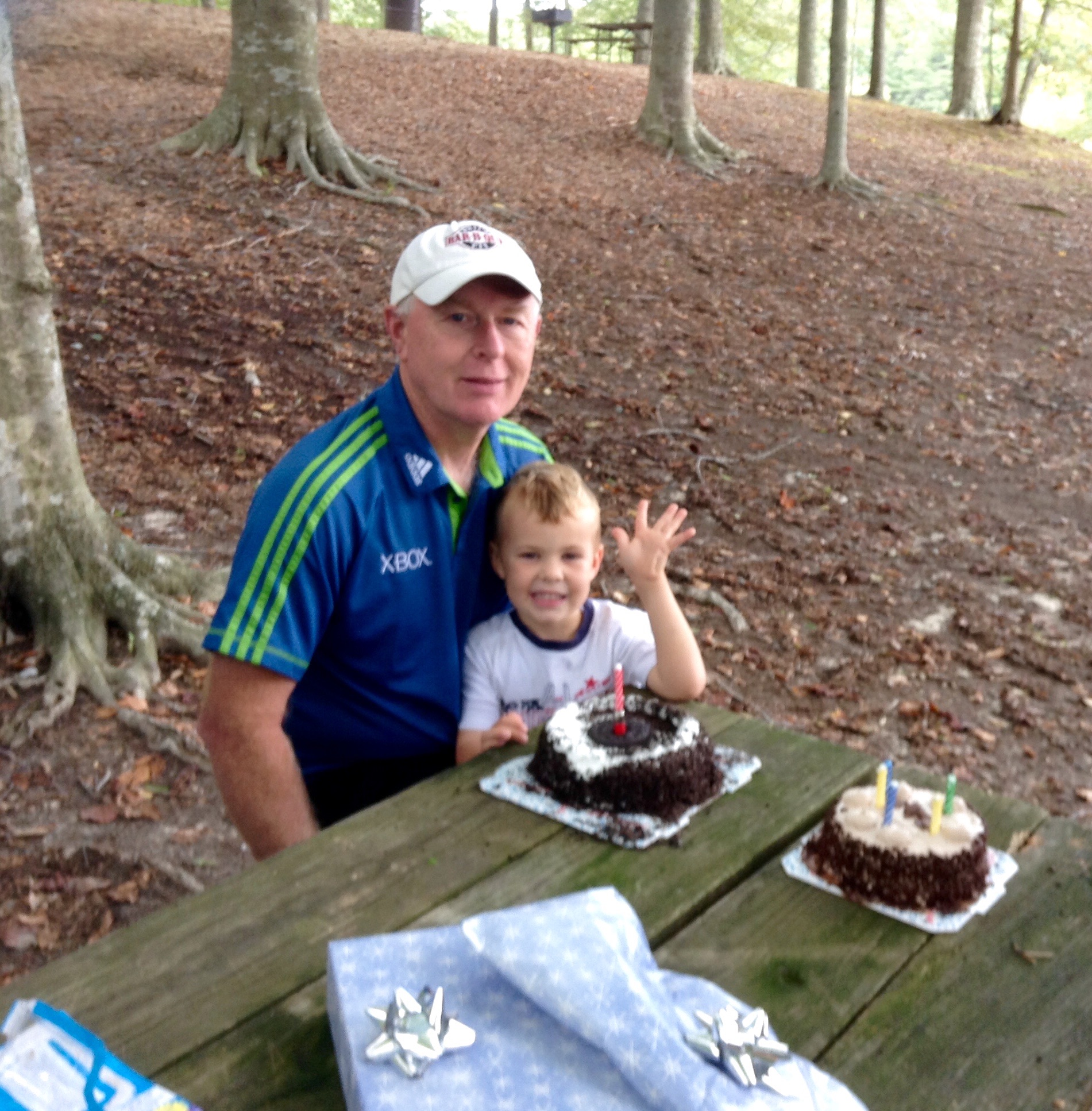
Daniel is 5!

Daniel is 5!

“Happy Birthday to YOU!”

This is something to celebrate!

Children, and all those who are young at heart enjoy birthdays. It is not just about getting older, it is reaching that milestone of another year. It is a day when we emphasize a person and what they mean to us. For our children, it is a day to make them feel significant as a part of our family.

In art, emphasis is described as “special attention or importance given to one part of a work of art”. This often causes the piece of art to communicate meaning because of what is emphasised. An example is the Last Supper by Leonardo DaVinci. One’s eye automatically goes to the middle of the painting  – to Jesus – because of the placement of the figures on each side, the perspective of the walls, and the lightness of Jesus’ robe. All these qualities emphasis the importance of Jesus, the focal point of the painting.

When we celebrate members of our families, we emphasize their importance which results in their feeling loved and appreciated. Each family celebrates in unique ways. It does not require a lot of money to make a child feel special. In fact, spending more may result in less personal attention.

Some thoughts to consider when planning children’s’ birthday celebrations:

  • limit the number of friends to the age of the child (this does not include cousins, who are entitled to come)
  • ask the child what they would like to do for their party (one of our children wanted friends to come and play baseball – how fun and easy was that!) One grandchild had a camp out in the backyard with a movie projected on a sheet hung from the deck.
  • if the child wants to go to Paris, France – discuss the realities of life, and then plan accordingly
  • during warm weather – one grandchild had a water party with water games like water balloons and watergun battles
  • decorations can be simple – don’t fall in the trap of copying a Pinterest layout that stresses you out for a two-year old – the child won’t notice
  • as children get older, the parties do NOT have to get bigger and bigger. A special outing as a family may be a chance to celebrate that child and his/her interests.
  • make sure the celebration is about that child  – not the photo ops.
  • most importantly – let your child know how thankful you are that God added him or her to your family

In Psalm 127, Solomon is rejoicing in God’s blessing of giving children. In verse 3 he says –

3 Children are a gift from the Lord;
they are a reward from him.

Are we responding to our children in such a way that they know they are a blessing to us? Or do they feel like they are in the way….a bother?

We must let our children know daily – not just on their birthdays –  that we are so thankful that God joined them to our family.

May we place emphasis on each child’s value to ourselves and to God.

Pattern

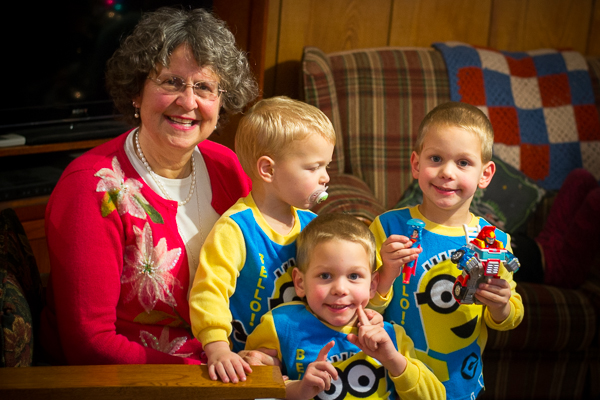
Nana and Minions

For the first time in my life, my schedule does not revolve around a school calendar.

Even before I started kindergarten in 1957, our family’s schedule followed the school calendar because my father taught high school.

I went from attending elementary school to junior high, then high school, and on to college. I graduated in June of 1974 and began teaching in August of that year. When we began having children, Phil was in seminary, afterward he began working at WCU in campus ministry, and then on to his teaching career as our own children began school. All that time we followed a school schedule.

I re-entered the “work force” as a volunteer teacher when our youngest child entered kindergarten and have been teaching in one capacity or another until I retired in June.

Last week I did not get up and either get myself or others ready for school.

My life until now has had a definite pattern – the school schedule.

  • start in August or September
  • new classes, new lessons, new challenges
  • off for Thanksgiving and Christmas
  • classes through winter (hoping for snow days)
  • off for spring break
  • finish the year STRONG
  • organize for the coming school year
  • off for the summer to RECHARGE
  • start again…..

Artists use pattern in many ways. The principle of design “pattern” is defined this way – “the regular arrangement of alternated or repeated elements.”

Patterns in art work give a sense of order and completeness.

Patterns in our lives give us a sense of order and security.

Children who have a pattern to their day are happier and healthier. They eat better and sleep better when they have regular times to eat and sleep. There will always be situations when these patterns are interrupted, but maintaining a routine whenever possible is so beneficial.

This pattern also develops a sense of security in the child because they know what is coming next. Children like the feeling of anticipating the activity they will do next and planning for it. That is not to say they don’t like surprises, but knowing what is next helps children cope with their surroundings and various situations. This is especially true for some children who NEED a pattern to their day to feel secure. These children will be better able to handle the inevitable changes to their routine better if they are given a warning of the change whenever possible and time to adjust.

We tried to maintain the pattern that our daughter and her husband have established this past week when their three middle boys stayed with us. Their family began to keep this schedule when their twins were born and their oldest child was 18 months old. The pattern was their link to sanity!

It has also created happy, secure children who generally know what is coming next. Not to say there are no surprises…. in fact there is never a dull moment!

The most important benefit is control of the chaos.

Truth be told, we adults function better when we have a regular routine. We used to tease my father that he always ate and went to bed at regular times, even when he was much younger. Now at 91 it seems to have paid off. He is very healthy and active.

Just as following a pattern, or repeating positive actions, is beneficial for our physical lives, it is even more important in our spiritual lives. Paul tells Timothy to follow the pattern Paul has set as he follows Jesus.

2 Timothy 1:13-14  (NLT)

13 Hold on to the pattern of wholesome teaching you learned from me—a pattern shaped by the faith and love that you have in Christ Jesus. 14 Through the power of the Holy Spirit who lives within us, carefully guard the precious truth that has been entrusted to you.

That is the most important pattern one can have in life – following the pattern of Jesus – living as He lived.

In a very real sense, my pattern has not changed since I have retired. I desired to follow Jesus before retirement – I desire to follow Him now as well.

May our lives be a beautiful pattern, reflecting the image God.