Cracked Pots

It has been one of those weeks where I have been hit with the same message from three different sources. You think I better pay attention?!!

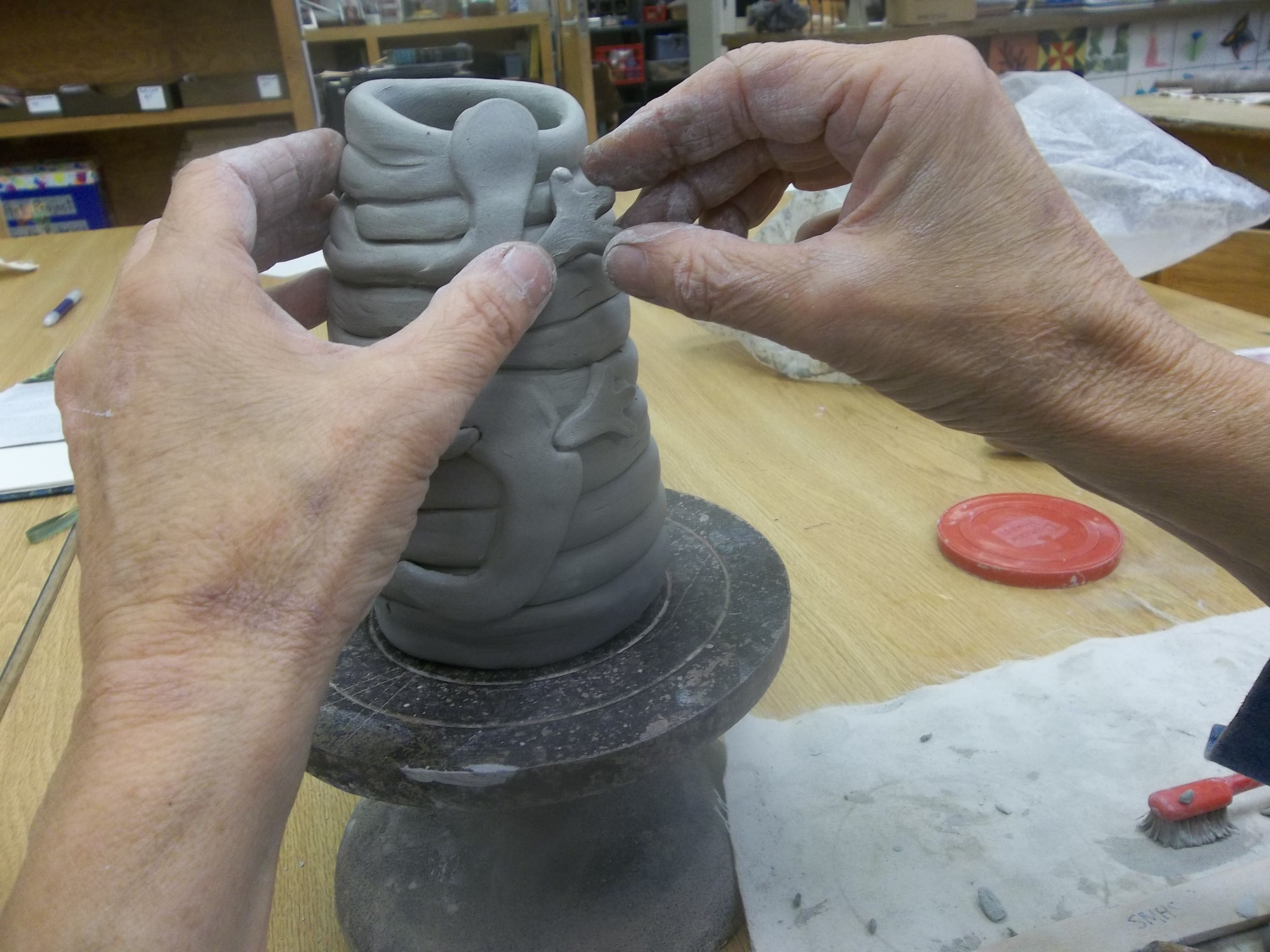
#1      My Honors Art III class is working on pottery. They are making ceramic pots and learning the properties and limitations of clay. I tell them clay is very forgiving, you can mold, re-mold, and even crush it and start all over again. Yet once you commit to a shape or design, you must follow certain rules to ensure successful completion of your project. Last week two students didn’t follow the “rule of thumb”. This rule states that no part of the form can be thicker than your thumb without providing a vent to let trapped air escape. Two students added clay to their pottery while forming and created areas that were thicker than their thumbs. Both of these pots blew up in the kiln while firing. These two students had been very successful making pottery that has been entered in several art shows, yet they had become a bit complacent and thought they knew what they were doing. Message for me – God is very patient, forgiving, and gentle. Yet at some point I am held accountable for following His Word. Past accomplishments aside – I must walk with God faithfully each day so I don’t become a “cracked pot.” 

#2       We attended a Sunday service with our two daughters and their families yesterday. There was a potter’s wheel in the foyer of the church building as we entered, with a bisque fired (first firing) pot from which part of the bottom was blown off.  The pastor preached from Jeremiah 18:1-12  on “In the Potter’s Hand”. The part of his message which spoke to me was in verses 1-4.

18:1  This is the word that came to Jeremiah from the Lord: 2 “Go down to the potter’s house, and there I will give you my message.” 3 So I went down to the potter’s house, and I saw him working at the wheel. 4 But the pot he was shaping from the clay was marred in his hands; so the potter formed it into another pot, shaping it as seemed best to him.

Pastor Thompson stated that God is the potter, we are the clay. He shared something I teach my students  – 75% of successful pottery is in the preparation of the clay. Message for me – God is at work forming me  – and every time I resist His effort, I make it harder on myself because God has to “re-shape and re-mold” me. Otherwise I will be a cracked pot.

# 3   The calligraphy calendar my sister-in-law Renee’ gave me has this verse for October 2nd  –

                            Isaiah 64:8    Yet you, Lord, are our Father.
We are the clay, you are the potter;
we are all the work of your hand.  
Message for me – as a loving Father, God wants the best for me. God does not form cracked pots.

As I have reflected on the three ways that I have been confronted with the reality of God at work  – creating me to be the vessel He wants so I can accomplish the purpose He has for me – I am reminded of God’s unconditional love for me.

God doesn’t give up, as I have been known to do when a piece of pottery isn’t formed the way I want. As our Father, God will continue working on us until we become the unique vessel, the work of His hands, that He planned. Then we will be able to pour out His Glory!

Beware!

      Doesn’t their mother bathe them?

No Fighting!!!!

                  “The worst thing you can ever think is “that will never happen to me” because then your guard is down and you are vulnerable to attack.”

I remember reading those words years ago in a book by J. Allan Petersen called the Myth of the Greener Grass. It was a short, but powerful message on the all too common issue of marital infidelity among clergy. Over the years I have observed the truth of these words, not just in Christian marriages, but with children of Christian parents as well. If  we find ourselves judging other parents and the way they manage their children, we can fall into a nasty trap.

“I would NEVER let my child do that!” “I can’t believe they let their children watch that on TV!” “They let their kids run wild, don’t they have any control over their kids?” “My children always tell me the truth, those children lie to get out of trouble.” and the ALL TIME WORST – “My child will never do that!”

If we are honest, we have all had thoughts similar to these, probably many times over. Yet we DON’T know all that is going on in the families of those we judge. Some parents allow their children to do certain things we find objectionable because their child is learning to overcome obstacles we can’t imagine. As a teacher I have seen some of my students face issues in their home life that are so horrific – it amazes me they make it to school at all, much less function productively. It is so very important that we recognize that each family is distinctive and each family faces circumstances that are unique.

There certainly are universal qualities that are generally considered desirable in families. Phil and I have facilitated parenting sessions for parents of adolescents over the years and Phil begins by asking parents “What do you hope for your children?” It is always good to begin a task with the goal in mind. The old saying – “You can’t steer a parked car” is true. If you don’t know where you want to end up – you won’t know when you get there. As a parent, if I don’t have a clear view of what I want my family to be like – I will not be actively leading my children in the right direction.

Back to the list from parents – we found that parents often knew what they didn’t want, but weren’t as clear about what they felt was important. If parents only work at avoiding certain behaviors, they will not be building character in their children’s lives. “Don’t talk to me in that tone of voice!” may send my child the message that it is not respectful to talk a certain way. Yet will that statement teach my child the respectful response? No. Only focusing on negative behaviors will not produce positive results. After considering what was most important to them, the parents in the sessions formed a pretty consistent list of positive qualities they hoped for their children.

  • honest
  • helpful and thoughtful (positive spin on “not selfish”)
  • happy, content
  • well-adjusted, friendly
  • self-supporting (generally added by dads)
  • successful – which most parents realized resulted from the above mentioned qualities.

There are no “perfect” families because families are made up of imperfect people. Yet we can certainly plan and “steer” toward making our families places that nurture the qualities we hope for our children. We must guard against a judgemental attitude that only reflects the negative and does not foster positive development.

I Corinthians 10: 11-13  NLT

12 If you think you are standing strong, be careful not to fall. 13 The temptations in your life are no different from what others experience. And God is faithful. He will not allow the temptation to be more than you can stand. When you are tempted, he will show you a way out so that you can endure.

The challenge for each of us as parents is to be intentional about training our children in positive, Godly ways, and avoid the trap of judging other parents. God is Faithful!!!

Open, Honest Conflict

Who is hiding?

“If any married couple tells you that they always agree, they are either lying or one member of the relationship is unnecessary”. I remember Jay Fesperman saying this as his lovely wife, Sally, stood next to him smiling sweetly. The Fespermans were the owners/directors of the Inn of the Last Resort in Franklin, North Carolina. This mountain retreat center held marriage and parenting retreats where Jay and Sally imparted Godly wisdom to young families in the 1970’s. My husband and I were privileged to attend several times. It wasn’t that we were slow learners –  at least I hope not –  it was more that we learned something new each time as our children grew older, as we matured in our marriage, and as circumstances changed in our lives.

The first time we attended the Christian Marriage and Parenting retreat it was 1977 and I was pregnant with our first child. I was teaching kindergarten at that time  and I could manage 23 five-year-olds easily. My classroom was organized and productive. Parenting was going to be a piece of cake!

Wrong!!! I had a difficult time getting a handle on organization in the home. Sometimes it was 5:30 before I even thought about supper, and that was the time the children were ready to eat. I would lay something down to change a diaper or resolve a sibling conflict and forget where I put it. When I left home to run errands, I often forgot something because I was in a hurry to get home to breastfeed, put the kids down for a nap, or feed them lunch.

This created some conflict in our marriage. I had been very competent as a teacher, but as a mother of four young children, I felt like I was struggling to keep my head above water. My frustration spilled over into my relationship with my husband.

Fortunately, we had learned some conflict resolution skills at the above mentioned Marriage and Parenting Retreat. Ignoring this conflict would not make it go away. It would not “fix itself” over time. We had to address this issue and come to a place of mutual understanding. Here is a list – please forgive me, but lists clarify things for me and bring order to my right-sided brain – of steps that have helped us resolve conflict in our family in a positive way.

  • Conflict is normal, even healthy, if resolved with respect. Differing opinions can bring new insight and balance to a relationship. No two thinking people always agree.
  • Resolve conflict at a “neutral” time. In other words, don’t discuss what appropriate discipline for a child should be when you are disciplining the child.That will allow the child to determine who is on their side and play the parents off one another. Present a united front – then discuss appropriate discipline when the child is not there. If the issue is varied opinions about manners at the table, discuss it before or after the meal, not during the meal. We are more defensive in the heat of the moment than if a concern is brought up later.
  • Address the present concern without bring up the past. “You did it again……” Maybe that is true, but we all need grace to change and the real issue is the present concern. This can be particularly disheartening for small children who by nature are learning to follow through and will repeat misbehavior.
  • Avoid using “always” and “never”. Besides being untrue, those words are often unfair. I may forget to lock the front door once in a while, but to say “You never lock the front door”  is not true. “You always leave your toys all over.” says to a child that you don’t notice when they do pick up their toys.
  • Let the other person know how their behavior makes you feel. I had to let Phil know that I felt rejected when he didn’t want to hear about my day, or talk to me about his. Believe me, this was not resolved once and for all time! We have revisited this issue several times in our marriage because of the differences in our personalities. This will happen with children as well. You may need to explain to a child several times that it is disrespectful to ignore a parent’s instructions, that you feel upset when they don’t listen.
  • There are times when you need to agree to disagree. As adults with different personalities, there are areas that you may never agree on. Phil and I have one area in particular. We recognize this and though it still causes occasional conflict, we refuse to let it divide us. With children, they may not agree, but they still must obey!
  • Love One Another – Love covers a multitude of sin.

Colossians 3:10-14 (NLT)

12 Since God chose you to be the holy people He loves, you must clothe yourselves with tenderhearted mercy, kindness, humility, gentleness, and patience. 13 Make allowance for each other’s faults, and forgive anyone who offends you. Remember, the Lord forgave you, so you must forgive others. 14 Above all, clothe yourselves with love, which binds us all together in perfect harmony.

These verses share the wisdom needed to live together in harmony. May God grant us His Spirit to do so.