Making Space

A friend, Janet Asbury, shared at church Sunday that God was convicting her of “making space”. She shared that this phrase is currently being used in our culture to denote the importance of being intentional in our every day lives. Making space for the really important things. In the hustle and bustle of all we fill our lives with – are we setting aside QUALITY time with God, or squeezing in a moment here and there when we “can”? Are we making space for God, our Father, creator of the universe? Is that space a priority or an afterthought?

That certainly convicted me! I just wrote a blog on June 1,2023 entitled “Cut It Out” about the need to cut out things in our lives that crowd out the really important things. (see the link below)

Cut it Out

Yet what Janet shared caused me to think about the difference between cutting something out and making space for something.

I can cut out plants in my garden that I no longer want in that space. I can dig them up and throw them over the bank, or plant them somewhere else. The issue becomes – what do I do with that space? If I just leave that space it will soon be filled again with weeds or another plant I may not want there. I must either mulch that space well so weeds can’t grow or plant a smaller, less invasive species. Otherwise I will soon have an overcrowded garden again. Back to the old same-old same-old!

This is true in our lives. We may cut out things we realize are not productive – but what do with that “space” that we created? If we are not intentional about filling that space, the same behavior and habits will return right back to where they were in our lives. This time they may be harder to root out.

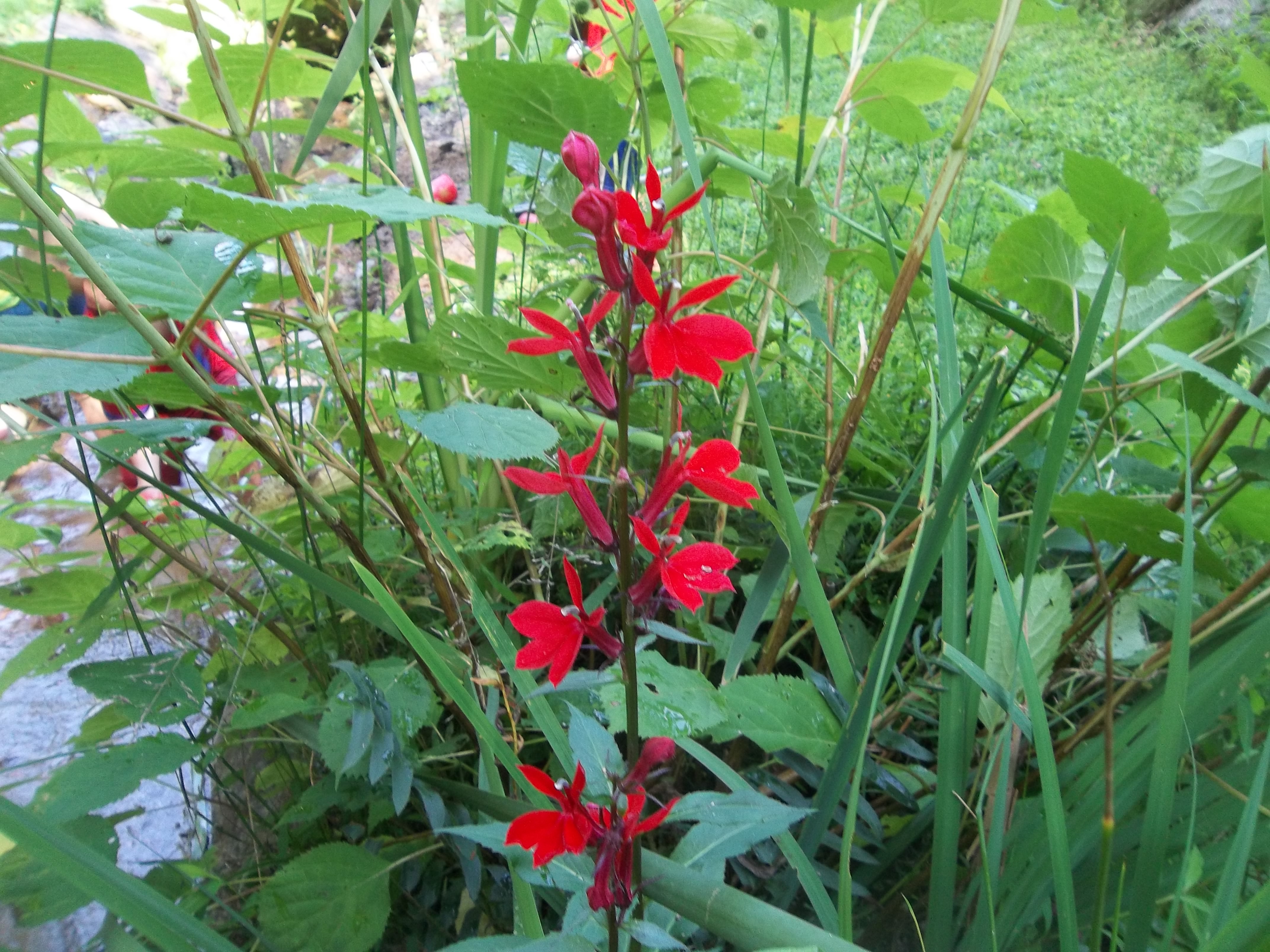
I have a beautiful butterfly weed plant that my father planted. Not only did he love the bright orange color, but he enjoyed watching the butterflies the blooms attracted. Last year it was very small and on closer observation I realized it was overcrowded by a nearby azalea and a groundcover. The azalea is beautiful in the spring, but cutting it back would not harm it and it would create space for the butterfly weed to grow. The ground cover was another story. It was invasive and just taking over.

So – one plant I cut back.

One plant I completely pulled up and threw over the bank.

Did that solve the problem once and for all? NO

I go back frequently and pull up weeds and that old ground cover to make space for the butterfly weed. It is not a “once and for all time” deal. Making space is an ongoing effort if I want to effect lasting change.

The disciple and apostle Peter describes the effort we must make spiritually to possess and maintain the qualities we want as a follower of Jesus. 2 Peter 1:3-8 says

3 His divine power has given us everything we need for a godly life through our knowledge of him who called us by his own glory and goodness. 4 Through these he has given us his very great and precious promises, so that through them you may participate in the divine nature, having escaped the corruption in the world caused by evil desires.

5 For this very reason, make every effort to add to your faith goodness; and to goodness, knowledge; 6 and to knowledge, self-control; and to self-control, perseverance; and to perseverance, godliness; 7 and to godliness, mutual affection; and to mutual affection, love. 8 For if you possess these qualities in increasing measure, they will keep you from being ineffective and unproductive in your knowledge of our Lord Jesus Christ.

I will grow spiritually as I intentionally make space for these qualities.

First Fruits

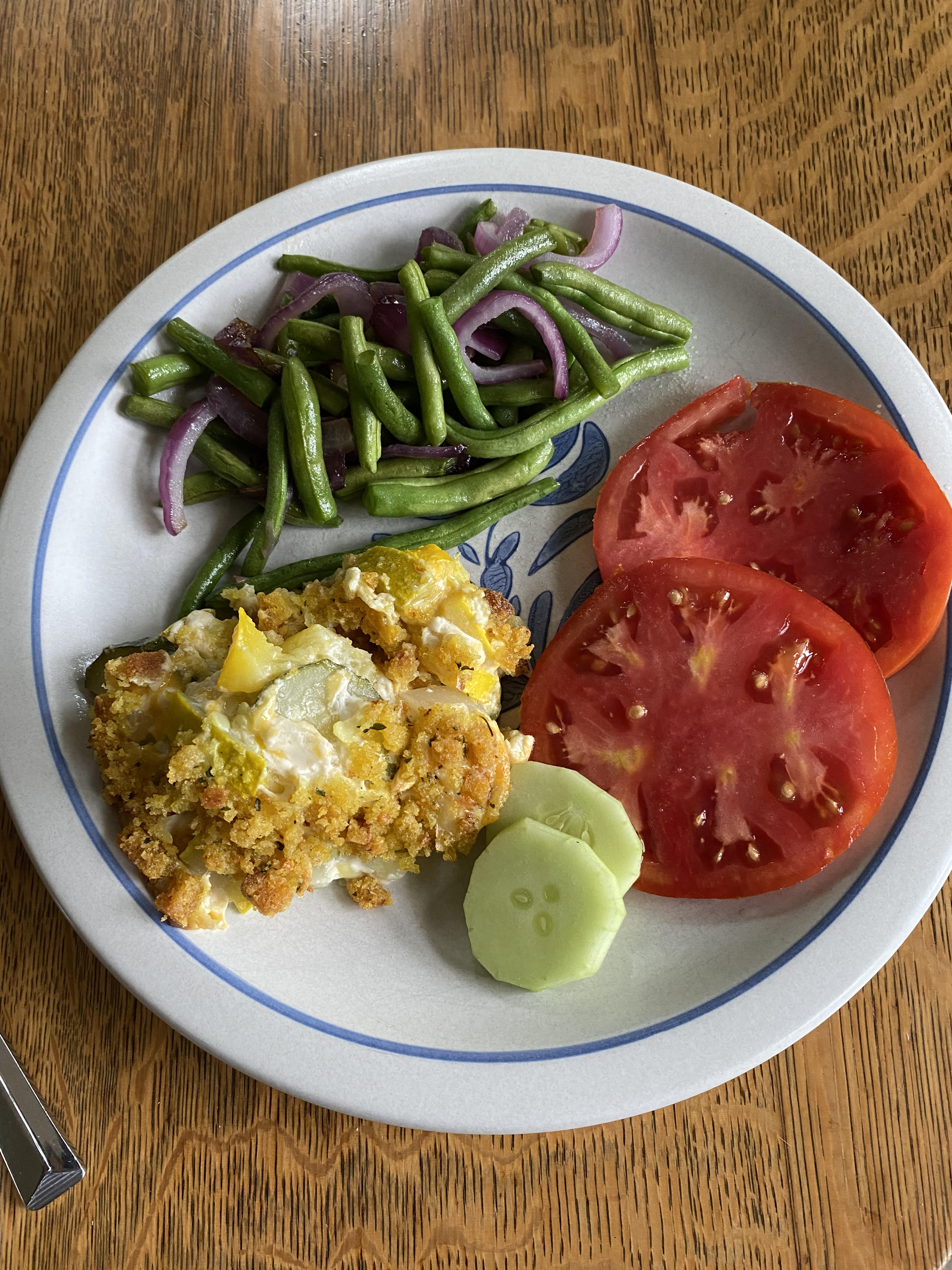
Phil and I picked the first run of beans from our garden Monday, snapped them, and then I canned 14 quarts. The first run of beans are always so pretty! Not a blemish, spot, or bad place on these beans. There is a feeling of satisfaction when the jars all seal and you see the fruits of your labor.

Yet there is always a realization that the “first fruit” or result of the garden is not just dependent on our work. There are many things that are outside our control when gardening. I was reminded of this as I canned the beans this week. Last year I did not can ANY beans – nary-a-one! I believe Phil planted beans 3 times and each time those first tender leaves appeared, groundhogs ate EVERY leaf. Needless to say we had no beans. Phil worked hard to eradicate the pests, but to no avail. The critters did not bother our squash, tomatoes, cucumbers, or lettuce. Just the beans. (something did munch on my lovely pumpkins last year just before I was going to gather them)

This year we have seen no pests so far. We have no idea why but we are so thankful!

God is honored when we recognize him as the source of all we have. We may plant the seeds, water them, and gather the harvest – yet who created the seed, the water to sprout the seed, and the soil to nurture the growth? We partner with the God of creation when we garden.

Proverbs 3:9-10 refers to first fruit.

9 Honor the Lord with your wealth,
with the first fruits of all your crops;

10 then your barns will be filled to overflowing,
and your vats will brim over with new wine.

It is a blessing to have vegetables and fruit to gather, put up for later use, and the ability to share some with others. Some years we have had an abundance of produce, some years, not so much. Sometimes we have been on the receiving end of vegetables and fruit from others’ gardens.

For me the message of this passage in Proverbs is to cultivate an attitude of humility. To acknowledge God as the source of our harvest and the results of our labor whether it is from the garden, our work place. or our homes. Humility also means that I acknowledge the responsibility to offer what I have to others as the “first fruits” that belong to God the creator. The first fruits should be from the best I have, not the “leftovers” or what I no longer want.

God deserves my best.

Cut it Out

Our family has a statement about our father that tells much about his character.

“He would rather cut off his arm than cut down a tree.”

Dad loved trees and spent hours taking folks on hikes in the Great Smoky Mountains identifying trees and describing their qualities and interactions with the environment. He planted various varieties of trees and loved the unique aspects of each. Big old trees were held in special esteem by Dad and he valued the size and leaf canopy of old growth trees. In his 80’s our father took up a new hobby for him – turning wooden bowls. He found special joy in using a variety of wood – admiring the grain, color, and texture of each different type of wood. He NEVER cut a live tree to get wood to turn into one of his bowls. He collected dead trees and cut them up carefully treating the ends of each cut so the wood dried slowly and didn’t split.

There was one exception to Dad’s self imposed “no cutting trees” rule. He would thin out small trees to encourage maximum growth of a more desirable tree. One example was his suggestion that we cut a tulip poplar that was growing near a gingko tree. His reasoning was that we had LOTS of tulip poplar trees, some being very large. This little tulip poplar would eventually become large and overshadow our one lone gingko tree. Phil cut the poplar down and several years later our gingko tree has grown to a large tree with a beautiful shape. Cutting down one tree definitely enhanced the life of the other tree.

There are times in our lives when we need to “cut something out”. It can be an activity, a habit that is unproductive, media use, a commitment that is no longer required, or an activity that someone else could do. Often those activities are good. Yet they may be occupying space (time) in our day that crowds out other better things. Just as I made a judgement on which is the more desirable tree, I make judgements on how I spend my 24 hours a day.

Have you found yourself saying “I am overwhelmed by what I have to do”?

Something needs to be cut out.

That is easier said than done. There have been times in my life when I was overwhelmed by the needs of my children, aging parents, job responsibilities, etc. – NONE of which I could (or wanted) to cut out.

Yet more often I am my own worst enemy. I pile things on because I think I “should”, I can’t say “no”, or I don’t realize I am doing too much until I am overwhelmed!

In Matthew 13:22-23 Jesus explains the parable of planting seeds he has just used in teaching his followers.

22 The seed that fell among the thorns represents those who hear God’s word, but all too quickly the message is crowded out by the worries of this life and the lure of wealth, so no fruit is produced. 23 The seed that fell on good soil represents those who truly hear and understand God’s word and produce a harvest of thirty, sixty, or even a hundred times as much as had been planted!”

No fruit is produced from seeds that are “crowded out by the worries of this life”. Notice Jesus does not say “if there are worries” or “you might feel worried”. No, when Jesus says the worries of this life it says to me that life has worries. Yet Jesus wants his followers to know that he has given them NEW LIFE which produces the fruit of the Holy Spirit in their lives: love, joy, peace, patience, kindness, goodness, faithfulness, gentleness, and self-control. (Gal.5:22)

So if I cut out the things in my life that crowd out the fruit of the Holy Spirit, I am able to experience peace and joy in the midst of my circumstances.