Along for the Ride – The Emotional Roller Coaster

We know that as women we have hormonal changes that affect and often dictate our emotions. These are often chemical responses that we have no control over, yet we must still carry on with life. We cannot control the circumstances, but in many cases we can control our response to the circumstances. (I say in many cases because sometimes it is a chemical response that we cannot control. In those cases, medical intervention is necessary, and beneficial)

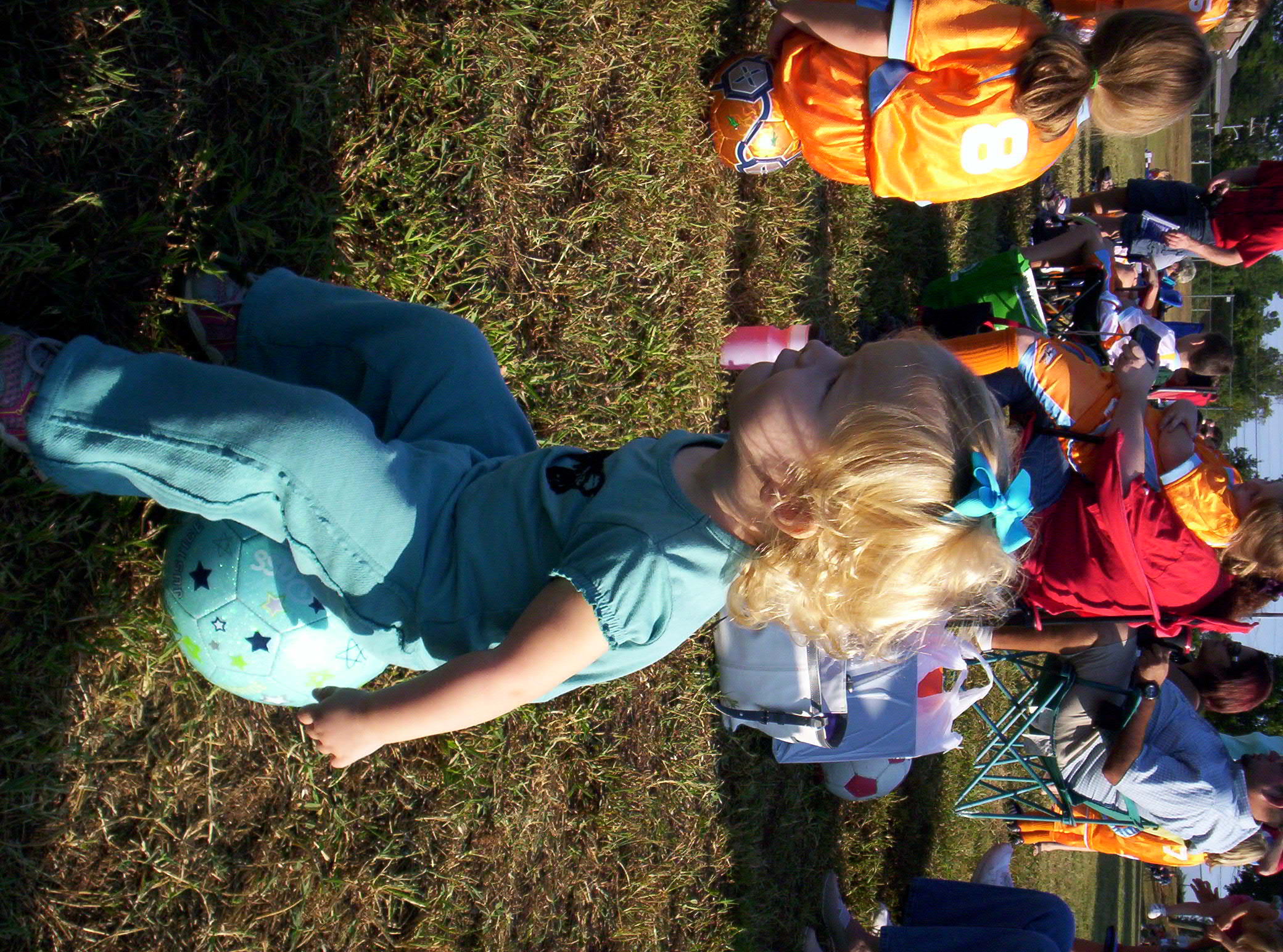
How can we help our children learn to have healthy emotional responses to others and the world around them? First we must acknowledge that emotions  are a God-given aspect of our nature as humans. Healthy children are born expressing emotions; crying when hurt, lonely, or afraid.  They also begin early smiling, laughing, and expressing excitement. Two of our grandsons LOVE to eat and it is fun to see their excitement when their mothers call them to the table. Their siblings better keep an eye on their food!

These expressions of emotion should be encouraged and affirmed when exhibited appropriately. They should be ignored or addressed firmly when used to manipulate or control. I remember the first time one of our children threw themselves down in Roses (pre-WalMart) and threw a fit in hopes of getting a certain toy. I had been taught to ignore the child when he/she throws a tantrum and I did just that. I calmly went down the next aisle and waited. It soon became quiet and I pushed the cart back to the previous aisle and saw our child lying there, waiting to see if anyone noticed. Since the “fit” did not result in extra attention , and certainly not the desired toy, I did not have to deal with that outburst again. A strong-willed child may try this several times, but by being consistent and firm your child will learn to control this negative behavior.

The Bible talks often about the “heart” which refers to the emotions. In Mark 12:30 Jesus says when asked what the greatest commandment is:

“Love the Lord your God with all your heart and with all your soul and with all your mind and with all your strength.”

When we encourage our children to love God with their whole hearts, it puts their own emotions in check. When we love ourselves first, emotions control our actions. It is all about us! As children begin to place God’s will and purpose for them first, they are able to learn that feelings come and go, but God’s love for them remains forever.

As a teacher, I have gotten to know a great variety of students over the years.  The unhappiest young people I see are the ones who have gotten their own way most of their lives. Their parents have mistakenly given in to them and they are never satisfied. These young people are selfish, demanding, and emotional wrecks because they are treated the way they treat others.

The happiest students I see are the ones who put others first. This is without exception. These students are kind, generous, and respectful and they receive these qualities back in return. Gary Smalley teaches about “Emotional Bank Accounts.” He says that what we invest in is what we withdraw. It makes sense, doesn’t it? Luke 6:38 says this very thing.

“Give, and it will be given to you. A good measure, pressed down, shaken together and running over, will be poured into your lap. For with the measure you use, it will be measured to you.”

Emotions are a part of who we are. They can be a blessing when we help our children learn to control their influence. This becomes more important the older our children become. So, now is a good time to begin encouraging positive emotional expressions and learning self-control of negative emotions. Then, hang on for an exciting ride!

Next week – the fourth aspect – Encouraging Spiritual Health.
Physical Training

I remember looking at my father’s Biology textbook and being spellbound by the pictures of human anatomy.  The most amazing part was the way the transparencies would layer each other showing first the skeletal structure, then the muscles and ligaments, the circulatory system, the organs, and finally the skin covering the human form.  Each page was fascinating and complex, and when I finally was in 10th grade and learned about the systems of our bodies and the way each worked in support of each of the others, I developed a deep respect for the manner in which the human body was created. To think that we are the result of innumerable mutations is beyond rational thought  in my humble opinion!

Psalm 139:14 (NIV)
14 I praise you because I am fearfully and wonderfully made;
   your works are wonderful, I know that full well.

Yes, our bodies are wonderfully made and I believe it is important to instill in our children an early respect and appreciation of our bodies as God created them to be. Physical activity brings such joy to children. We have three grandsons who are nearing their first birthday and as they pull up on everything in reach, it tickles me to watch them “dance” whenever they hear music. They bounce and sway to the music, and it comes naturally without any intentional instruction.

It is also fun to watch children when they are set free in a wide open space – they RUN! You open the car doors at a park and as soon as they get free of the confines of their seat belts they burst forth with physical activity. Healthy bodies were designed to move, and when we are able to use our bodies as God intended, it brings joy. Our brains release serotonin when we engage in physical activity and it works in children as well. Children need to play physically. They will eat better, sleep better, and get along with others better when they move muscles and expend energy. Think about the times weather prevents outside play (cabin fever) and the irritability that results in the parents as well as the children. Planning physical activity is just as important as planning meals and naps.

Some ways to work physical activity into busy schedules are:

  • take walks while supper is in the oven. The walk can be short, but it will exercise muscles and encourage appetites.
  • dance around to a favorite praise CD, even create your own exercise routine, jumping, hopping, arm circles, toe touches, etc.
  • make a obstacle course/fitness course in your yard. This can be very simple: a log to jump over, a landscape timber to balance along, a tree/bush, rock, to run around and back.
  • ride bikes/ tricycles  together.  This may not be possible depending on location, but bike riding and scooter riding certainly gets the heart rate up.
  • walk to places whenever possible. Again, this depends on your location, but it provides exercise while getting you to your destination.
  • include your child in your personal exercise routine at times. This is not always possible, but even if you must adapt your pace or length of workout to include your child, it will reap great rewards.
  • find a nearby park and meet friends/family there to play
  • some children are born with physical limitations. It is a special challenge for parents to work with these children within the limits of their physical abilities.

I Corinthians 9: 24-25

 24 Do you not know that in a race all the runners run, but only one gets the prize? Run in such a way as to get the prize.                              25 Everyone who competes in the games goes into strict training. They do it to get a crown that will not last, but we do it to get a crown that will last forever.

These verses refer to the physical discipline that athletes need to succeed, just as we must discipline ourselves to follow Christ. All of us must find the physical activities that best meet our children’s unique situation. Making  physical activity an early and important part of our child’s life will bless them for them for the rest of their lives and celebrate the glory of God’s creation.

Next week the topic is Emotional Health of Young Children.

Think on These Things

My friend Alice Marie and I recently attended church with her mother and the pastor said that many of us suffer from a syndrome called “ANTS”  – Automatic Negative Thought Syndrome. I remember being affected by this malady  – especially as my children were going through one or another  “phase”. I KNEW meal time would be a whine fest, nap time a challenge, and bath time a wrestling match. By anticipating negative behavior, was I setting myself up for difficulty? Probably so. Children do go through phases and their brain development as toddlers does precipitate some erratic behavior, but I know that when I expect the worst – that is most likely what I will get.

You’ve heard the saying (pardon the grammar, Phil) “When mamma ain’t happy, ain’t nobody happy!” We mothers do set the tone in our homes. If we are negative, our children will be as well. If we respond to whining with a firm, “Tell me what is wrong, I can’t understand when you whine”, instead of whining right back with, “You always whine and it’s driving me crazy!’ we will redirect the negative behavior. It is not easy – because whining DOES drive us crazy, yet as an adult, I must choose to model a positive attitude.

Philippians 4: 8 says,

Finally, brothers and sisters, whatever is true, whatever is noble, whatever is right, whatever is pure, whatever is lovely, whatever is admirable—if anything is excellent or praiseworthy—think about such things. ”

Paul is encouraging us to choose positive thoughts with which to fill our minds. Thoughts determine our speech and then lead to the actions we take. If my thoughts toward my children are lovely and admirable, it follows that my speech will be as well.

When our children were young my friend Carol made me a cross stitch of this verse which I hung in my kitchen. It seems like I needed it in the kitchen the most. You might have a room or a situation that is a challenge for you, where you feel “ANTS” taking over. If it would help, make a list of true, noble, right, pure, lovely, and admirable thoughts. Hang it up. The list may change from time to time.  Yet the principle remains the same. Think on these things.