Emphasis

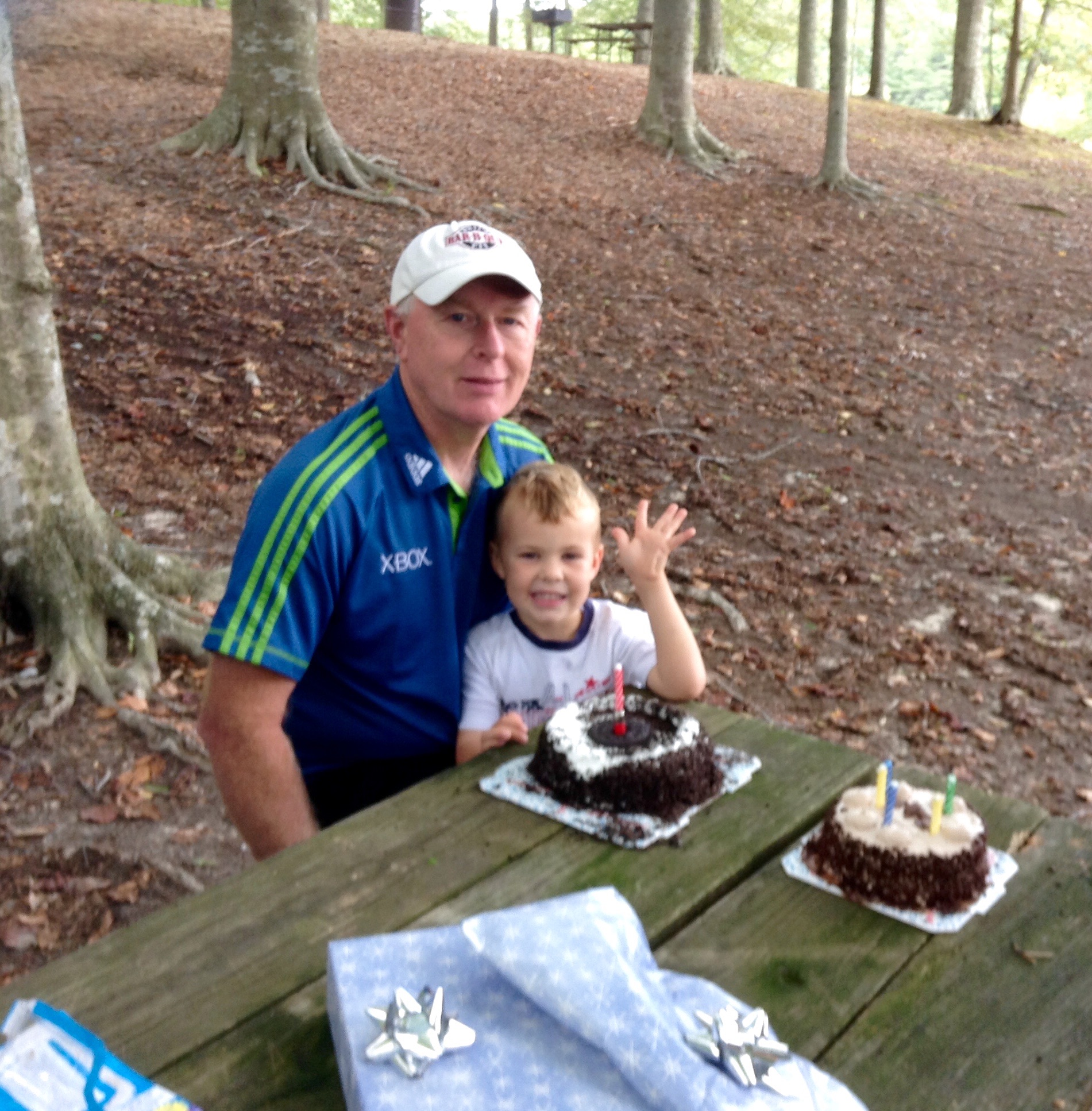
Daniel is 5!

Daniel is 5!

“Happy Birthday to YOU!”

This is something to celebrate!

Children, and all those who are young at heart enjoy birthdays. It is not just about getting older, it is reaching that milestone of another year. It is a day when we emphasize a person and what they mean to us. For our children, it is a day to make them feel significant as a part of our family.

In art, emphasis is described as “special attention or importance given to one part of a work of art”. This often causes the piece of art to communicate meaning because of what is emphasised. An example is the Last Supper by Leonardo DaVinci. One’s eye automatically goes to the middle of the painting  – to Jesus – because of the placement of the figures on each side, the perspective of the walls, and the lightness of Jesus’ robe. All these qualities emphasis the importance of Jesus, the focal point of the painting.

When we celebrate members of our families, we emphasize their importance which results in their feeling loved and appreciated. Each family celebrates in unique ways. It does not require a lot of money to make a child feel special. In fact, spending more may result in less personal attention.

Some thoughts to consider when planning children’s’ birthday celebrations:

  • limit the number of friends to the age of the child (this does not include cousins, who are entitled to come)
  • ask the child what they would like to do for their party (one of our children wanted friends to come and play baseball – how fun and easy was that!) One grandchild had a camp out in the backyard with a movie projected on a sheet hung from the deck.
  • if the child wants to go to Paris, France – discuss the realities of life, and then plan accordingly
  • during warm weather – one grandchild had a water party with water games like water balloons and watergun battles
  • decorations can be simple – don’t fall in the trap of copying a Pinterest layout that stresses you out for a two-year old – the child won’t notice
  • as children get older, the parties do NOT have to get bigger and bigger. A special outing as a family may be a chance to celebrate that child and his/her interests.
  • make sure the celebration is about that child  – not the photo ops.
  • most importantly – let your child know how thankful you are that God added him or her to your family

In Psalm 127, Solomon is rejoicing in God’s blessing of giving children. In verse 3 he says –

3 Children are a gift from the Lord;
they are a reward from him.

Are we responding to our children in such a way that they know they are a blessing to us? Or do they feel like they are in the way….a bother?

We must let our children know daily – not just on their birthdays –  that we are so thankful that God joined them to our family.

May we place emphasis on each child’s value to ourselves and to God.
Pattern

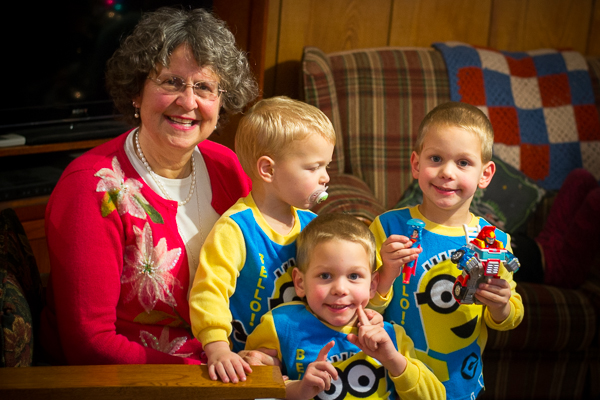
Nana and Minions

For the first time in my life, my schedule does not revolve around a school calendar.

Even before I started kindergarten in 1957, our family’s schedule followed the school calendar because my father taught high school.

I went from attending elementary school to junior high, then high school, and on to college. I graduated in June of 1974 and began teaching in August of that year. When we began having children, Phil was in seminary, afterward he began working at WCU in campus ministry, and then on to his teaching career as our own children began school. All that time we followed a school schedule.

I re-entered the “work force” as a volunteer teacher when our youngest child entered kindergarten and have been teaching in one capacity or another until I retired in June.

Last week I did not get up and either get myself or others ready for school.

My life until now has had a definite pattern – the school schedule.

  • start in August or September
  • new classes, new lessons, new challenges
  • off for Thanksgiving and Christmas
  • classes through winter (hoping for snow days)
  • off for spring break
  • finish the year STRONG
  • organize for the coming school year
  • off for the summer to RECHARGE
  • start again…..

Artists use pattern in many ways. The principle of design “pattern” is defined this way – “the regular arrangement of alternated or repeated elements.”

Patterns in art work give a sense of order and completeness.

Patterns in our lives give us a sense of order and security.

Children who have a pattern to their day are happier and healthier. They eat better and sleep better when they have regular times to eat and sleep. There will always be situations when these patterns are interrupted, but maintaining a routine whenever possible is so beneficial.

This pattern also develops a sense of security in the child because they know what is coming next. Children like the feeling of anticipating the activity they will do next and planning for it. That is not to say they don’t like surprises, but knowing what is next helps children cope with their surroundings and various situations. This is especially true for some children who NEED a pattern to their day to feel secure. These children will be better able to handle the inevitable changes to their routine better if they are given a warning of the change whenever possible and time to adjust.

We tried to maintain the pattern that our daughter and her husband have established this past week when their three middle boys stayed with us. Their family began to keep this schedule when their twins were born and their oldest child was 18 months old. The pattern was their link to sanity!

It has also created happy, secure children who generally know what is coming next. Not to say there are no surprises…. in fact there is never a dull moment!

The most important benefit is control of the chaos.

Truth be told, we adults function better when we have a regular routine. We used to tease my father that he always ate and went to bed at regular times, even when he was much younger. Now at 91 it seems to have paid off. He is very healthy and active.

Just as following a pattern, or repeating positive actions, is beneficial for our physical lives, it is even more important in our spiritual lives. Paul tells Timothy to follow the pattern Paul has set as he follows Jesus.

2 Timothy 1:13-14  (NLT)

13 Hold on to the pattern of wholesome teaching you learned from me—a pattern shaped by the faith and love that you have in Christ Jesus. 14 Through the power of the Holy Spirit who lives within us, carefully guard the precious truth that has been entrusted to you.

That is the most important pattern one can have in life – following the pattern of Jesus – living as He lived.

In a very real sense, my pattern has not changed since I have retired. I desired to follow Jesus before retirement – I desire to follow Him now as well.

May our lives be a beautiful pattern, reflecting the image God.


Balance

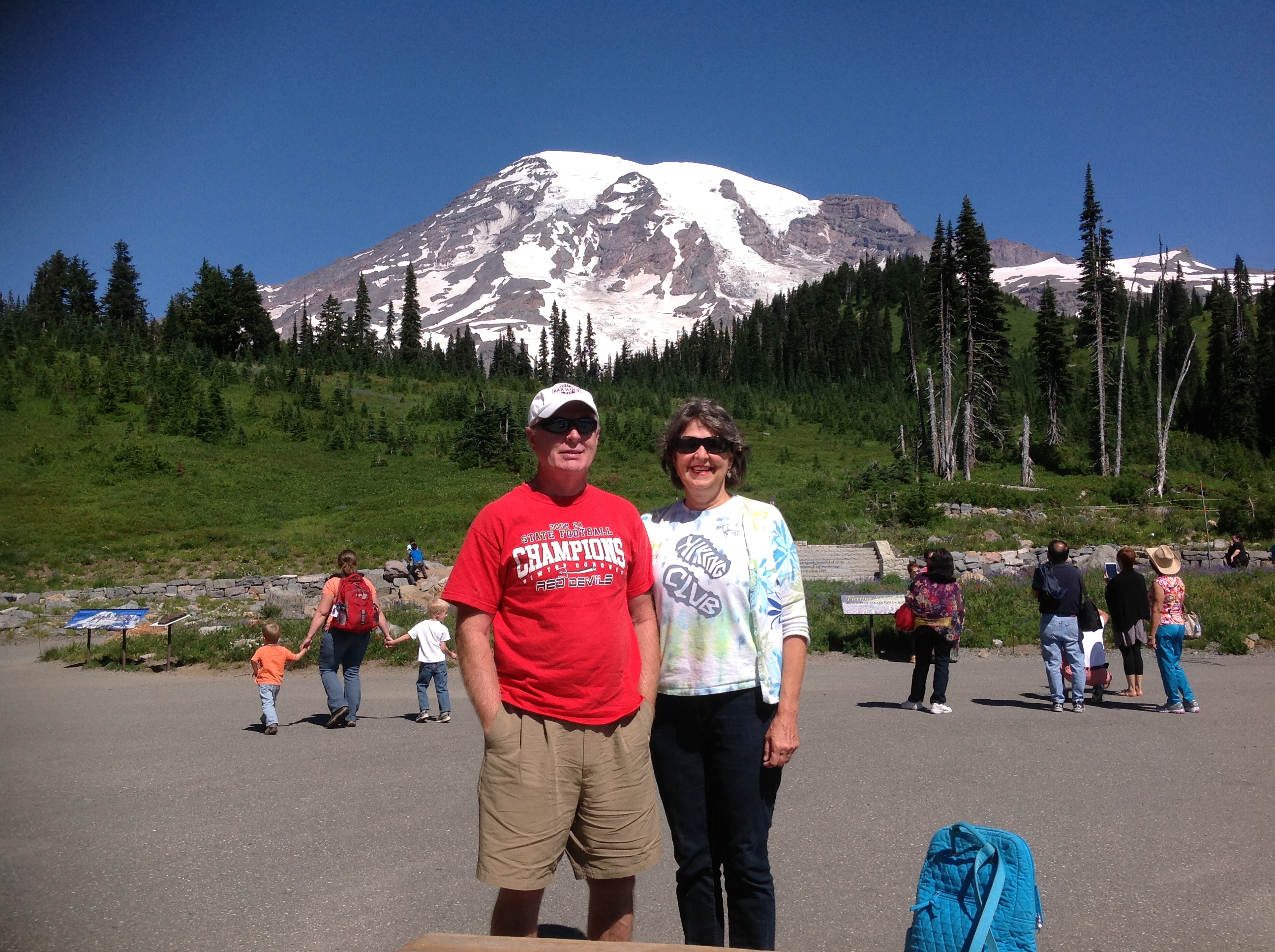
Phil and Gayle

As an artist, I use the principles of design as tools to create my art work. My students would often ask me “what makes something art?”

Great question. This question would usually come up after seeing work by an artist like Jackson Pollock who threw paint at his canvases. Barnett Newman would paint a red line down a large canvas. “I could do that”, my students would say. Yes, they could. But, their name was not Pollock of Newman.

Students never asked me “Why is that considered art?” after seeing images of Michelangelo’s or Leonardo Vinci’s art work. These artists are without question masters because something in their work is timeless and connects with people across various cultures and backgrounds.

Great art has balance.

Balance in art occurs when the parts of the artwork are arranged to create the impression of equality in importance. For instance, the background does not appear more important than the focal point – or main object. Our eyes sense when things are in balance – it is pleasing to look at.

We also sense when things are out of balance. Something just doesn’t look “right”, even if we can’t pinpoint it.

I belive this is an important issue in human relationships as well. There must be balance in the relationship for it to be meaningful and “right”.

Notice that the definition of balance in art uses the word “equality”. For a relationship to be balanced there has to equality of value – each person in the relationship must have equal value.

This does not mean the people in the relationship have the same roles, talents, abilities, or responsibilities. Yet they have the same worth.

Galatians 3:27-29 (NLT)

27 And all who have been united with Christ in baptism have put on Christ, like putting on new clothes. 28 There is no longer Jew or Gentile, slave or free, male and female. For you are all one in Christ Jesus. 29 And now that you belong to Christ, you are the true children of Abraham. You are his heirs, and God’s promise to Abraham belongs to you.

See the balance Paul describes? He also tells the Roman Christians that they need to have balance in their view of themselves. Romans 12:3-5 NLT

3 Because of the privilege and authority God has given me, I give each of you this warning: Don’t think you are better than you really are. Be honest in your evaluation of yourselves, measuring yourselves by the faith God has given us. 4 Just as our bodies have many parts and each part has a special function, 5 so it is with Christ’s body. We are many parts of one body, and we all belong to each other.

Paul warned us about thinking “you are better than you really are”. He KNEW we have a problem with that!

The solution is recognizing that our value is based on the fact that we are children of God, our heavenly father. When we see ourselves, and others, as His children, we all have equal value – we all “belong to each other!”

This truth will create balance in all our relationships if we truly believe it and live it.

Let’s pray for balance in all our relationships.

Next week we will look at harmony, another element of design.